The best plungers and toilet brushes
This is the one item on any checklist that becomes urgent at 11pm on a Sunday. Buy it on day one, buy the flange type, and never think about it again.
Quick picks
Our ranking at a glance. Tap any row for the full write-up, or the price to go straight to Amazon. Scores are ours, from published specs and what owners report after a year — we have not lab-tested these, and we say so plainly.
| # | Product | Best for | Score | Price |
|---|---|---|---|---|
| 1 | 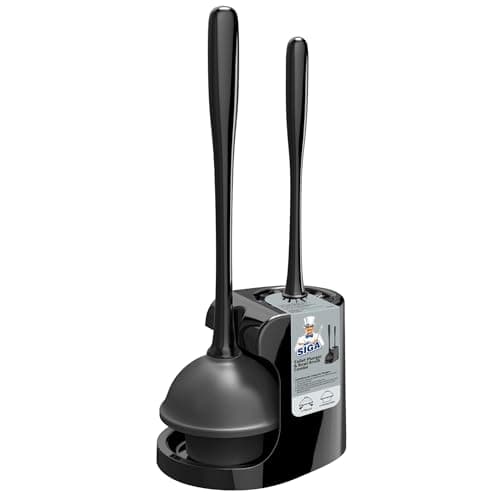 MR.SIGA Toilet Plunger and Bowl Brush Combo Both tools, one footprint | Both tools, one footprint | 8.88.8 out of 10 on our Fits a small bathroom, Value, Durability, Renter-safe scoring | |
| 2 | 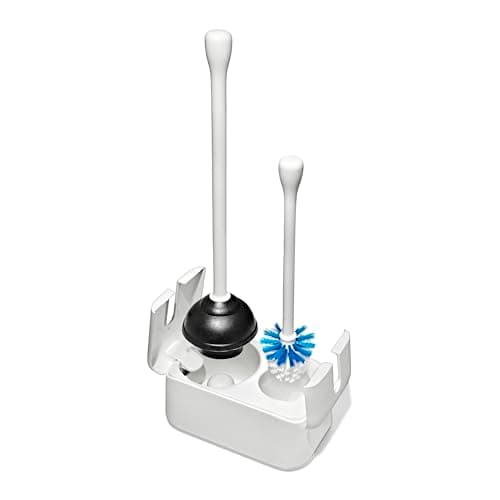 OXO Good Grips Toilet Brush & Plunger Set The set you keep for a decade | The set you keep for a decade | 8.68.6 out of 10 on our Fits a small bathroom, Value, Durability, Renter-safe scoring | |
| 3 | 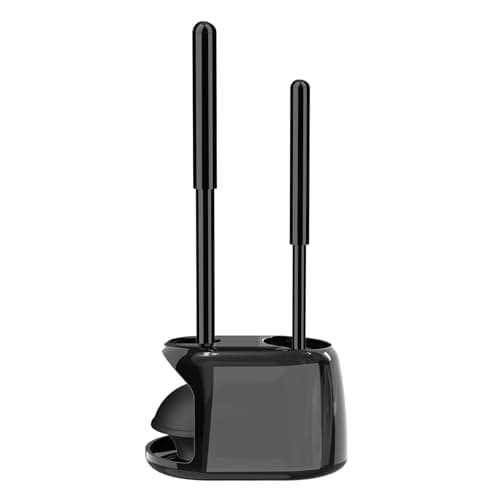 SetSail Semi-Hidden Toilet Brush and Plunger Set A slim gap beside the toilet | A slim gap beside the toilet | 8.78.7 out of 10 on our Fits a small bathroom, Value, Durability, Renter-safe scoring | |
| 4 | 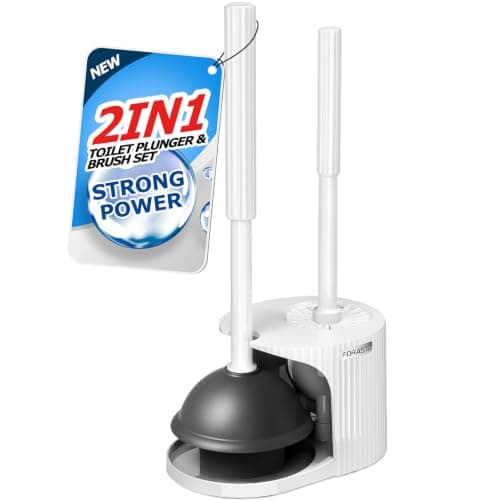 FORASTO 2-in-1 Toilet Brush and Plunger Set The cheapest pair that works | The cheapest pair that works | 8.48.4 out of 10 on our Fits a small bathroom, Value, Durability, Renter-safe scoring | $11.99View on Amazon $15.99 · 25% off |
#ad — Amazon links on this page are affiliate links. How this site is funded.
There is one genuinely important fact in this category and most people do not know it. There are two kinds of plunger and the common one does not work on a toilet.
- A cup plunger — the classic red rubber half-sphere on a stick — is designed for a flat drain: a sink, a bath, a shower tray. On a toilet it cannot seal the curved outlet, so it just sloshes.
- A flange plunger has an extra soft rubber sleeve that folds out of the cup and pushes into the toilet’s outlet, creating a proper seal. This is the one that works. Every pick on this page is a flange design.
A flange plunger also works on a sink if you fold the sleeve back inside the cup, so one plunger genuinely covers the whole apartment.
How to actually clear a blockage
Most people plunge wrong, which is why it so often ends with water on the floor.
- Do not flush again. If the bowl is already full, another flush overflows it. If you must, lift the tank lid and push the flapper closed by hand to stop the fill.
- Check the water level. You need enough water to cover the plunger cup — the seal is made by water, not air. If the bowl is nearly empty, add a jug of water.
- Insert at an angle so air escapes from the cup, then seat it squarely over the outlet. Trapped air is what causes the splash.
- First push is gentle. A hard first push drives the trapped air out violently and sprays the room.
- Then pump firmly, 10 to 15 times, keeping the seal. The pull strokes do as much work as the pushes — you are rocking the blockage loose, not pushing it down.
- Lift off and see if it drains. Repeat a couple of times before trying anything else.
If three rounds of that does not clear it, stop. A toilet auger (about $20) is the next step, and in a rental the step after that is the landlord — a repeatedly blocking toilet is usually a drain problem, not a usage problem, and it is their repair.
Do not reach for the drain chemicals
Caustic drain openers are a poor choice in a toilet. They are hazardous to handle in a confined bathroom, they can damage older pipework and seals, and if the blockage does not clear you have left a bowl full of caustic liquid that someone then has to plunge — which is genuinely dangerous.
A plunger is faster, free after the first purchase, and cannot hurt anyone. If you do want a non-mechanical option, hot (not boiling) water and a squirt of dish soap left for twenty minutes works surprisingly often on a soft blockage. Never pour boiling water into a porcelain bowl — thermal shock can crack it.
Storing it so it is not grim
The thing that makes a plunger unpleasant is standing water in its caddy. Look for a ventilated or raised drip tray that lets the head dry rather than sitting in a puddle. All four picks here have one; the cheapest has the worst version of it.
For a bathroom where the toilet is visible from the door, a fully concealing canister (the OXO set) is worth the premium. For a bathroom with a four-inch gap beside the toilet, a slim semi-hidden design fits where nothing else will.
Toilet brushes wear out — splayed bristles clean nothing. Budget to replace the brush head or the whole brush annually; it costs a few dollars and nobody ever does it.
The short version
- Buy a FLANGE plunger. A cup plunger cannot seal a toilet outlet and will not work.
- Cover the cup with water, insert at an angle, first push gentle. That prevents the splash.
- Avoid caustic drain chemicals in a toilet — and never pour boiling water into porcelain.
- Buy it on day one. It is the only item on any checklist that becomes urgent at 11pm.
Every pick in detail
#ad we may earn a commission · price as of October 6, 2026
#1 · Both tools, one footprint
MR.SIGA Toilet Plunger and Bowl Brush Combo
A proper flange plunger and a bowl brush in a ventilated caddy. Buy it before you need it — this is the one item on any checklist that is genuinely urgent at 11pm.
- Fits a small bathroom
- 8.6
- Value
- 8.8
- Durability
- 8.2
- Renter-safe
- 10.0
What we like
- Flange design seals a toilet outlet properly — most cheap plungers do not
- Ventilated caddy means it dries instead of sitting in a puddle
- Brush head reaches under the rim
What to know
- Caddy is bulkier than the slim hidden designs
- White tray shows stains
- Brush bristles splay after a year
Specifications
- Flange plunger (the kind that seals a toilet, not a sink)
- Bowl brush with an under-rim head
- Ventilated drip tray so both dry
- Compact combined caddy
Who it is for
Every single apartment, dorm and house. Put it on the day-one list.
#ad we may earn a commission · price as of October 6, 2026
#2 · The set you keep for a decade
OXO Good Grips Toilet Brush & Plunger Set
OXO's canisters close around the heads so nothing is on display, and the handles are the only ones here that still feel solid after years. It costs three times the others for a reason.
- Fits a small bathroom
- 8.0
- Value
- 6.8
- Durability
- 9.6
- Renter-safe
- 10.0
What we like
- Fully concealed — the only set that looks intentional in a visible bathroom
- Handles do not flex or snap
- Canister catches drips rather than pooling
What to know
- Most expensive by a wide margin
- Canisters need occasional rinsing out
- Larger footprint than a slim caddy
Specifications
- Plunger with a concealing canister
- Brush with a drip-stop lid
- Rubber-grip handles
- Rust-proof throughout
Who it is for
A first house, or a small bathroom where the toilet is visible from the door.
#4 · The cheapest pair that works
FORASTO 2-in-1 Toilet Brush and Plunger Set
Twelve dollars for both tools in one holder. Nothing special, but it beats the alternative of discovering you own neither.
- Fits a small bathroom
- 9.2
- Value
- 9.8
- Durability
- 6.0
- Renter-safe
- 10.0
What we like
- Cheapest complete pair
- One object to store
- Adequate for occasional use
What to know
- Plunger cup is thin and flexes under real pressure
- Handles feel cheap
- Tray holds standing water
Specifications
- 2-in-1 holder for brush and plunger
- Compact base
- Plastic construction
- Drip tray
Who it is for
A dorm or a tight move-in budget. Upgrade when it fails.
Common questions
What kind of plunger works on a toilet?
A flange plunger — the type with a soft rubber sleeve that extends from the cup and pushes into the toilet outlet. The common red cup plunger is designed for flat sink and bath drains and cannot form a seal on a toilet. A flange plunger also works on sinks if you fold the sleeve back inside.
How do you unclog a toilet without a plunger?
Hot (not boiling) water and a generous squirt of dish soap, left for twenty minutes, clears a soft blockage surprisingly often. Never use boiling water — thermal shock can crack a porcelain bowl. Avoid caustic drain openers in a toilet: they are hazardous in a small bathroom and leave you with caustic water to deal with if they fail.
Why does water splash everywhere when I plunge?
Trapped air in the cup, driven out by a hard first push. Insert the plunger at an angle so the air escapes, seat it squarely, and make the first push gentle. After that, pump firmly — the pull strokes matter as much as the pushes.
How often should you replace a toilet brush?
About once a year, or whenever the bristles splay outward — a splayed brush does not reach under the rim and barely cleans. It costs a few dollars and is one of the most commonly neglected replacements in a bathroom.
Who is responsible for a blocked toilet in a rental?
A one-off blockage from use is normally the tenant’s to clear. A toilet that blocks repeatedly usually indicates a drain or installation problem, which is the landlord’s repair. Report recurring blockages in writing so there is a record.