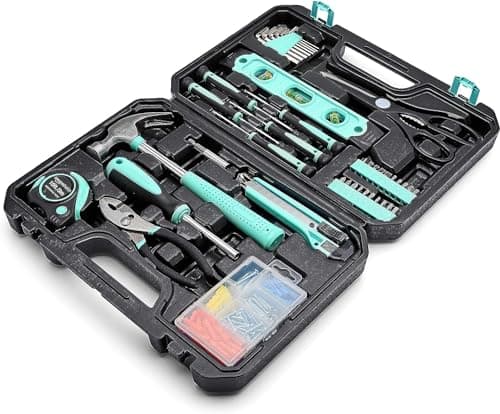
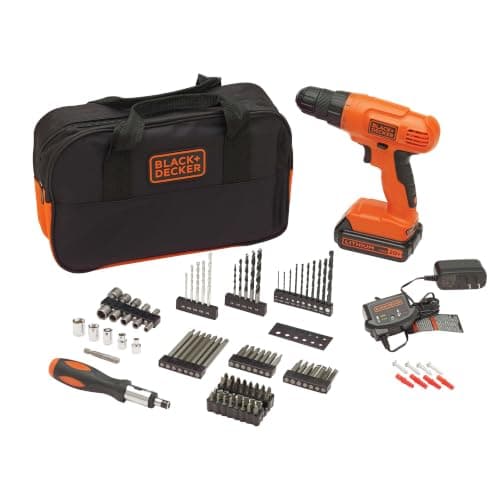
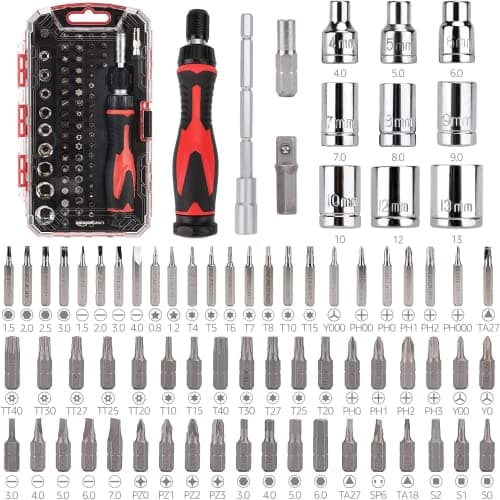
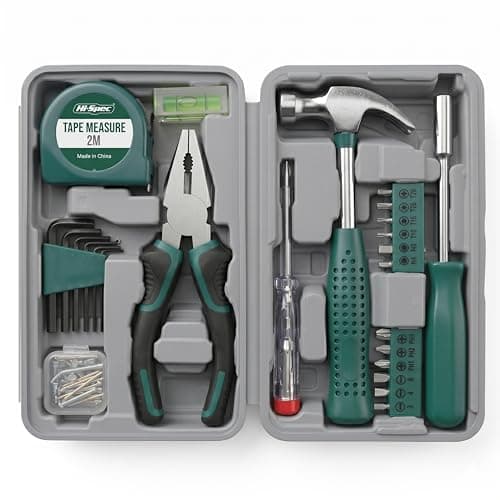
Tool kits are sold by piece count, and piece count is close to meaningless. A “142-piece household tool kit” contains about twenty actual tools plus roughly a hundred screwdriver bits, a dozen hex keys and some sockets. A 325-piece kit is the same arithmetic with more bits.
So the first useful thing to know is which dozen tools a home actually uses, and the second is that an apartment and a house need quite different lists.
The twelve tools a home uses
What each tool is for, and whether kits include it
Tool
What you use it for
In a basic kit?
Claw hammer, 16 oz
Picture hooks, pulling nails, tapping furniture dowels home
Yes
Screwdriver with interchangeable bits
Flat-pack furniture, outlet plates, appliances, loose handles. The most-used tool
Yes
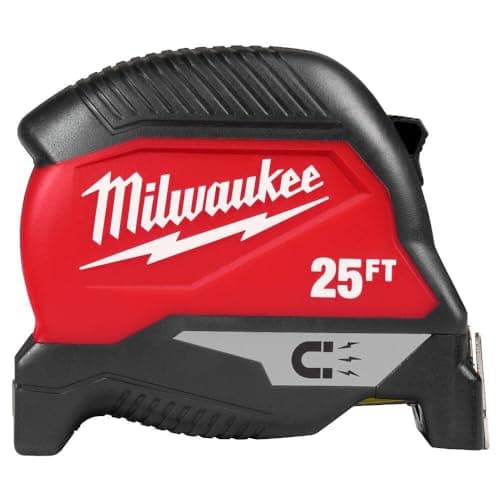
Tape measure, 25 ft
Will the sofa fit, how wide is the doorway, how long is the wall
Usually
Adjustable wrench
Tap fittings, bolts, a bike
Usually
Pliers — combination and needle-nose
Gripping, bending, pulling, retrieving things
Yes
Utility knife
Boxes, carpet, caulk, trimming
Usually
Spirit level
Shelves and pictures that are actually straight
Sometimes
Hex keys
Flat-pack furniture, bike components
Yes
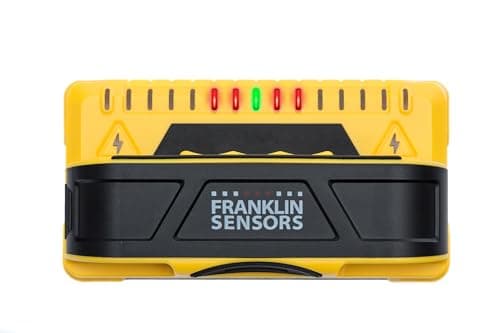
Stud finder with AC detection
Finding framing — and the cable you were about to drill
Rarely
Cordless drill
Any hole, any long screw, furniture assembly at speed
No
Pencil
Marking where the drill goes
No. Costs nothing.
Small parts organizer
Screws, anchors and hooks sorted rather than loose
No. $8, transformative.
A good household kit covers the first eight. The last four you add separately, and each is worth a page of its own: stud finders, drills, and the parts organizer is in tool boxes.
An apartment needs a different kit than a house
This distinction changes which kit to buy, and most guides collapse it.
An apartment needs seven things: a screwdriver with bits, hex keys, a small hammer, pliers, a tape measure, adhesive picture-hanging strips and a parts organizer. About $45, and it fits in a kitchen drawer. The jobs are flat-pack furniture, picture hooks, battery changes and a loose cabinet handle — not renovation. Everything else is either a house’s problem or the landlord’s.
A house adds a drill, a stud finder, a proper level, a 6-foot step ladder, a tool box and eventually a socket set. Call it $200 to $250, and it is the first time that what breaks is yours to fix.
A drill is worth owning in both cases, and for a renter the reason is furniture rather than walls — assembling a wardrobe or a bed frame by hand is genuinely miserable, and a drill with a clutch turns an afternoon into forty minutes.
The one drill feature that matters most
Every drill driver has a numbered collar behind the chuck — usually 1 to 11. That is the clutch, and it limits how much torque the drill applies before it slips and stops turning.
It is the feature that prevents the two mistakes everyone makes with their first drill: driving a screw straight through a cabinet panel, and stripping a screw head into a useless crater. Set it around 4 or 5 for furniture screws, 8 or above for long screws into framing, and clutch-off (the drill symbol) only for drilling holes.
It is also exactly what an impact driver lacks, which is why an impact driver is the wrong first tool despite being more powerful — see drill vs impact driver.
Renter-safe is a standing criterion here
Half of what gets written about home improvement assumes you own the walls. You may well not, so every guide in this section flags what is reversible and what is not.
The two things worth knowing up front:
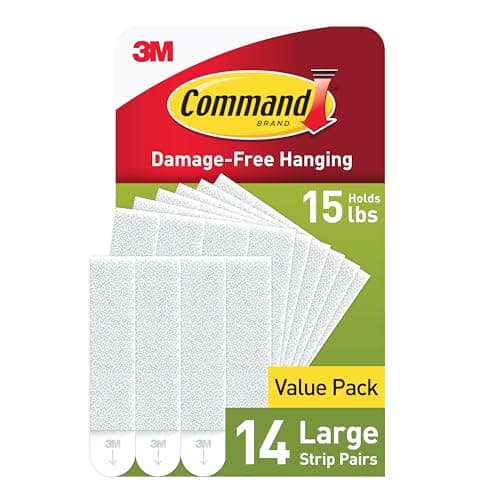
Adhesive strips hold more than people think, and fail in specific ways. Large picture-hanging strips are rated at 15 pounds per pair. They fail on textured walls, on wallpaper, and — the one nobody knows — on paint less than about four weeks old, because the adhesive bonds to uncured paint and pulls it off. Remove them by pulling the tab straight down about 12 inches, never outward. Full detail in hanging things without damaging walls.
Filling a small hole is trivial, and fear of holes leads people to use adhesive where a screw is safer. A nail hole takes three minutes and $4 of spackle to make invisible, and a properly filled small hole is normally fair wear and tear. Anything over 50 pounds, or anything above a bed or sofa, should go into a stud regardless.
What to report rather than fix
This matters practically as well as legally: attempting a repair on a system can transfer liability to you for consequential damage, and can void the landlord’s obligation to fix it properly.
Systems are theirs; surfaces are yours. Report anything electrical beyond a bulb, anything plumbing beyond plunging a toilet, gas in any form, heating and air conditioning, supplied appliances, windows, exterior doors and locks, a broken extractor fan, pests, and anything structural including damp.
Report it in writing, with photographs and a date, even if you also phone. That record is what protects your deposit and establishes when the problem was raised. Full dividing line in renter-safe repairs you can do yourself.
Two safety items nobody buys
Safety glasses, about $8. Drilling into masonry or cutting anything sends fragments upward. This is the cheapest insurance in the house and almost nobody owns a pair.
A stud finder with AC live-wire detection, $15 to $40. It prevents the single most expensive and dangerous mistake available to a homeowner. Being wrong costs considerably more than the tool.
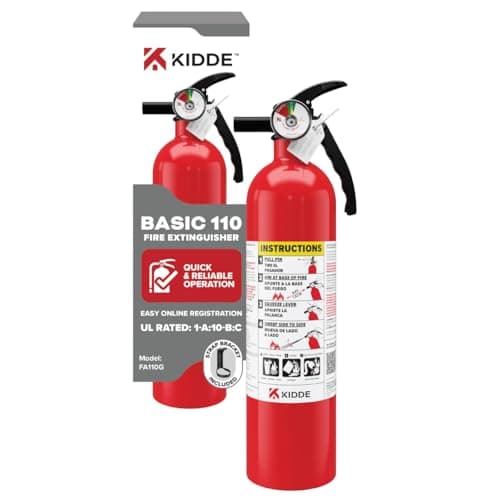
Beyond tools, a first home needs an extinguisher per floor, a kitchen-rated extinguisher or a fire blanket, working smoke and CO alarms, a first aid kit and furniture anchor straps — about $120, and where each one goes matters more than which one you buy. See home safety essentials.
Where you keep tools decides whether you use them
This affects outcomes more than anything on this page. A tool kit in a basement or a detached garage gets used roughly a third as often as one in a hall cupboard, which means small jobs do not get done and then become larger ones.
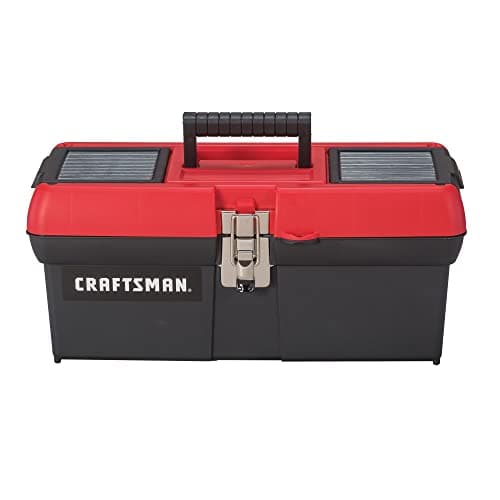
In an apartment, keep a compact kit in a kitchen drawer. In a house, keep the main box on your main living floor and a small kit in a drawer for the weekly things. And sort the fixings — screws, anchors and picture hooks in an $8 compartment organizer is genuinely the difference between a usable kit and a drawer of loose metal.
Everything in tools & fix-it
14 guides. The roundups show our top pick and what it costs right now, so you can buy from here without reading further — or open the page for the alternatives and the reasoning.
Extinguishers, alarms, a first aid kit and furniture anchors — plus where each one actually goes.
Buying for a whole place?
If you are setting up an entire apartment, dorm or house rather than shopping for one room, start with the complete checklist — every line has a pick, a live price and a running total.
About twelve: a 16 oz claw hammer, a screwdriver with bits, a 25-foot tape measure, an adjustable wrench, combination and needle-nose pliers, a utility knife, a spirit level, hex keys, a stud finder, a cordless drill, a pencil and a small parts organizer. Roughly $200 all in.
Do I need tools if I rent?+−
Seven of them, for about $45 — a screwdriver with bits, hex keys, a small hammer, pliers, a tape measure, adhesive picture-hanging strips and a parts organizer. A drill is worth adding for furniture assembly even if you never drill a wall.
Is a 142-piece tool kit better than a 39-piece one?+−
Not necessarily. Piece count is mostly screwdriver bits and hex keys — count the whole tools instead, and check whether the kit includes a tape measure and a level, which smaller kits often omit.
What is the clutch on a drill for?+−
It limits torque so the drill slips and stops rather than driving a screw too deep or stripping its head. It is the most useful feature for a beginner. Impact drivers have no clutch, which is why they are the wrong first tool despite being more powerful.
How do I hang things without damaging rental walls?+−
Adhesive picture-hanging strips, rated 15 pounds per pair. Clean the wall with rubbing alcohol first, make sure the paint is at least four weeks cured, press for 30 seconds, and remove by pulling the tab straight down about 12 inches — never outward.
What repairs should I not do myself in a rental?+−
Anything electrical beyond a bulb, anything plumbing beyond plunging, gas, heating and air conditioning, supplied appliances, windows, locks, the extractor fan, pests and anything structural. Report those in writing with photographs — attempting them can make you liable.