The best stud finders for home use
Before you hang a TV or a heavy shelf, you need to know where the timber is and where the cable is. A $20 to $40 tool prevents the most expensive mistake in the house.
Quick picks
Our ranking at a glance. Tap any row for the full write-up, or the price to go straight to Amazon. Scores are ours, from published specs and what owners report after a year — we have not lab-tested these, and we say so plainly.
| # | Product | Best for | Score | Price |
|---|---|---|---|---|
| 1 | 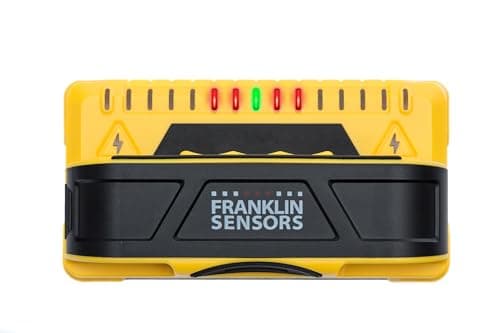 Franklin Sensors ProSensor M150 9-Sensor Stud Finder Finding the stud first time | Finding the stud first time | 8.98.9 out of 10 on our Beginner-friendly, Value, Durability, Stores small scoring | |
| 2 | 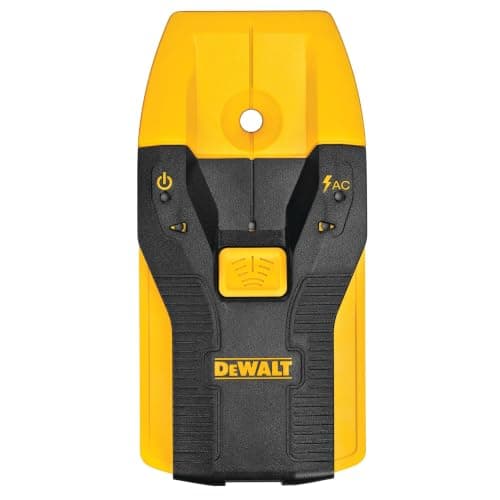 DEWALT Stud Finder with LED Arrows Fifteen dollars that works | Fifteen dollars that works | 8.98.9 out of 10 on our Beginner-friendly, Value, Durability, Stores small scoring | |
| 3 | 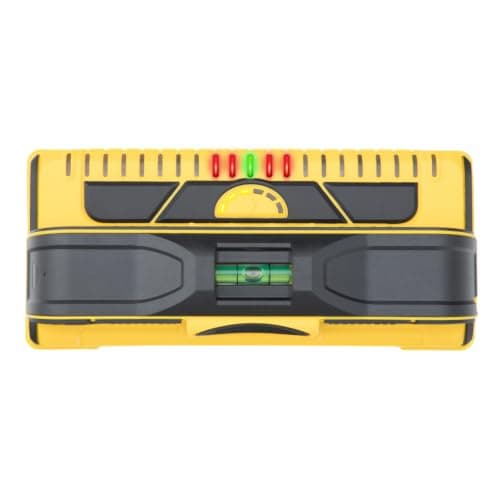 Franklin Sensors ProSensor M210 13-Sensor Stud Finder Thick or awkward walls | Thick or awkward walls | 8.48.4 out of 10 on our Beginner-friendly, Value, Durability, Stores small scoring | |
| 4 | 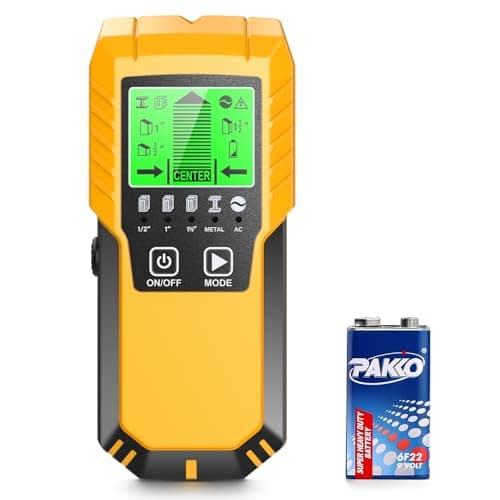 Povlen Stud Finder Wall Scanner, Wood/Metal/AC Pipes and cables as well as studs | Pipes and cables as well as studs | 8.48.4 out of 10 on our Beginner-friendly, Value, Durability, Stores small scoring |
#ad — Amazon links on this page are affiliate links. How this site is funded.
A stud finder locates the vertical timber framing behind drywall. That matters because drywall on its own holds almost nothing. A screw into hollow drywall will pull out under a few pounds of load. A screw into a stud holds a television.
The other function is at least as important: finding the live cable you were about to drill into. Electrical cable runs vertically from outlets and horizontally between them, and drilling into one is dangerous and expensive. Any finder you buy should have AC detection.
Why multi-sensor models are genuinely better
This is the main thing separating a $15 finder from a $40 one, and the difference is real.
- A single-sensor finder reads one point. You calibrate it on blank wall, sweep sideways until it beeps, mark that edge, then sweep from the other direction to find the second edge, then estimate the middle. Multiple passes, and a false positive sends you off entirely.
- A multi-sensor finder reads a 7-inch span simultaneously and lights up over the whole width of the stud at once. You place it flat, press, and both edges are shown. No calibration, no sweeping, no estimating the center.
For someone hanging one picture a year, a good single-sensor finder like the DEWALT is fine and costs $15. For anyone mounting a television, a floating shelf or a heavy mirror, the multi-sensor is worth the money — being wrong costs more than the tool.
What to look for
| Feature | Matters? | Why |
|---|---|---|
| AC live-wire detection | Essential | Prevents drilling into a cable. Non-negotiable. |
| Multi-sensor array | A lot | Shows both stud edges at once. No calibration, far fewer false reads. |
| Metal detection mode | Useful | Finds copper pipe and metal studs — relevant near kitchens and bathrooms. |
| Scan depth | Somewhat | ¾ in covers standard drywall. Plaster and lath or double drywall needs more. |
| Clear edge indication | A lot | LED arrows or a full-width light beats interpreting a beep. |
| Calibration-free operation | Nice | One less step to get wrong; multi-sensor models get this for free. |
Finding a stud without a stud finder
Worth knowing, both as a backup and as a sanity check on whatever the tool tells you.
- Studs are usually 16 inches apart, center to center (sometimes 24 in newer or lighter construction). Find one and you can measure to the rest.
- Start at an outlet or a light switch. These are fixed to the side of a stud, so there is timber immediately beside the box — usually to the left in US construction, though not reliably.
- Knock along the wall. Hollow between studs, noticeably solid over one. Crude, and it genuinely works once you have heard the difference.
- Look for nail or screw dimples in the paint, especially in raking light. Drywall is screwed to studs, and the filler over those screws often shows faintly.
- Check the baseboard. Nails in the baseboard go into studs.
Use these to confirm what a finder tells you, not to replace it — none of them finds the live cable, which is the hazard.
When you cannot hit a stud
Often the stud is not where you need the fixing. Then the anchor does the work, and the type matters:
- Up to about 10 lb: an adhesive strip or a simple plastic plug. See hanging things without damaging walls.
- 10 to 25 lb: a self-drilling drywall anchor, often called an E-Z anchor. Goes in with a screwdriver, no drill needed.
- 25 to 50 lb: a toggle bolt or a snap-toggle, which opens behind the drywall and spreads the load.
- Over 50 lb, or anything above a bed or a sofa: into a stud, with a proper screw. Do not improvise this. A falling television or mirror is a serious injury.
Always check the weight rating on the anchor packet and treat it as a maximum rather than a target.
The short version
- Drywall alone holds almost nothing. Heavy things go into a stud or a rated toggle.
- AC live-wire detection is non-negotiable. Drilling a cable is the mistake to prevent.
- Multi-sensor finders show both stud edges at once — no calibration, far fewer false reads.
- Studs are usually 16 inches apart, and there is timber beside every outlet box.
Every pick in detail
#ad we may earn a commission · price as of October 6, 2026
#1 · Finding the stud first time
Franklin Sensors ProSensor M150 9-Sensor Stud Finder
Nine sensors read a 7-inch span at once and light up over the whole stud, so you see both edges immediately. No calibration, no sweeping, no second guess.
- Beginner-friendly
- 9.6
- Value
- 7.8
- Durability
- 9.2
- Stores small
- 8.0
What we like
- Dramatically more reliable than single-sensor finders, which is the whole point
- Shows stud width, so you can center a screw properly
- Live-wire warning before you drill into a cable
What to know
- Twice the price of a basic finder
- Needs to sit flat — textured or very thick walls reduce accuracy
- Bulkier to store
Specifications
- 9 sensors covering a 7 in span simultaneously
- Shows both stud edges at once — no edge-finding routine
- AC live-wire warning
- No calibration step; place it flat and press
Who it is for
Anyone hanging a TV, heavy shelf or mirror. Getting this wrong costs more than the tool.
#ad we may earn a commission · price as of October 6, 2026
#2 · Fifteen dollars that works
DEWALT Stud Finder with LED Arrows
A single-sensor finder done properly: LED arrows point toward the stud instead of leaving you to interpret a beep. The best of the cheap finders.
- Beginner-friendly
- 8.6
- Value
- 9.6
- Durability
- 8.4
- Stores small
- 9.6
What we like
- Arrows are far clearer than a bare beeper
- Fits a pocket or a small tool kit
- DEWALT build quality at a low price
What to know
- Needs calibration on blank wall each time
- You sweep to find each edge separately
- No live-wire detection
Specifications
- 3/4 in scan depth
- LED directional arrows
- Detects wood and metal studs
- Compact, pocketable
Who it is for
Occasional picture and shelf hanging where you only need roughly the right spot.
#ad we may earn a commission · price as of October 6, 2026
#3 · Thick or awkward walls
Franklin Sensors ProSensor M210 13-Sensor Stud Finder
Thirteen sensors and deeper scanning for plaster-and-lath or double-drywall walls, where the M150 starts to struggle.
- Beginner-friendly
- 9.2
- Value
- 6.8
- Durability
- 9.2
- Stores small
- 7.4
What we like
- Handles thick plaster and double drywall
- Widest read span here
- Still no calibration routine
What to know
- Most expensive by a wide margin
- Overkill for standard drywall
- Large
Specifications
- 13 sensors, wider span
- Deeper scan than the M150
- AC live-wire detection
- Same no-calibration operation
Who it is for
An older house with plaster walls.
#ad we may earn a commission · price as of October 6, 2026
#4 · Pipes and cables as well as studs
Povlen Stud Finder Wall Scanner, Wood/Metal/AC
Scans for metal pipe and live cable as well as timber, which is the safer tool if you are drilling somewhere you suspect plumbing.
- Beginner-friendly
- 8.0
- Value
- 8.8
- Durability
- 7.6
- Stores small
- 9.2
What we like
- Metal mode finds copper pipe before you drill into it
- LCD shows mode and depth clearly
- Reasonable price for the modes
What to know
- Requires calibration per scan
- False positives in metal mode near ductwork
- Plastic build
Specifications
- Multiple scan modes: stud, metal, AC wire
- LCD display with depth indication
- Audible and visual alerts
- Battery powered
Who it is for
Drilling near a kitchen or bathroom wall where pipes are likely.
Common questions
Do I need a stud finder?
If you are hanging anything over about 10 pounds, yes. Drywall alone pulls out under light load, and the cable you cannot see is the real hazard — which is why any finder you buy should have AC live-wire detection.
How far apart are wall studs?
Usually 16 inches on center in US construction, sometimes 24 in newer or lighter builds. Find one and you can measure to the others. There is also timber immediately beside every outlet and switch box.
Are multi-sensor stud finders worth it?
For anything heavy, yes. They read a 7-inch span at once and show both edges of the stud without calibration or sweeping, which removes the guesswork single-sensor models leave you with. For hanging one picture a year, a good $15 single-sensor finder is adequate.
How do you find a stud without a stud finder?
Start at an outlet or switch, which is fixed to the side of a stud, then measure 16 inches to find the next. Knocking along the wall also works — hollow between studs, solid over one. Neither method finds live cable, so use them to confirm a finder rather than replace it.
How much weight can a drywall anchor hold?
A plastic plug around 10 pounds, a self-drilling anchor 25, a toggle bolt 50 or more. Treat the printed rating as a maximum, not a target. Anything over 50 pounds, or anything mounted above a bed or sofa, should go into a stud.