
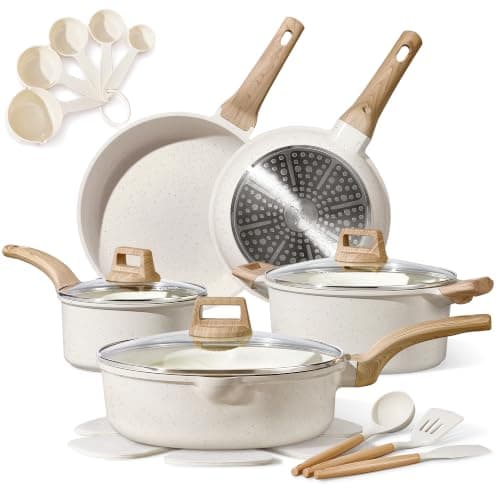
Best Cookware Sets
The best cookware sets for a small apartment
Nesting, detachable-handle and buy-once stainless sets compared for kitchens with two or three cabinets.
Our pick: CAROTE 20-Piece Detachable-Handle Nonstick Set
Kitchen
What a small kitchen actually needs on day one — and the four things most lists tell you to buy that you can skip.
A first-apartment kitchen is a space problem disguised as a shopping problem. The lists you find elsewhere assume a kitchen with cabinets; most first apartments have two uppers, two lowers, and about eighteen inches of counter that is not already occupied by a sink or a stove.
So the useful question is not “what does a kitchen need” but “what earns its cabinet and counter space”. That reframing changes several of the answers, and it is why our cookware pick nests into one cabinet and our coffee maker is five inches wide.
You can cook and eat a meal on your first evening with seven things: cookware, a knife, a cutting board, a dish rack, a trash can, plates and cutlery, and dish soap. That is roughly $200.
Everything else — the microwave, the coffee maker, the food storage, the air fryer — can genuinely wait a week or two, and waiting makes you buy better. You will know whether the oven works, how much counter you actually have, and whether you cook here at all before you commit another $250.
| When | What | Roughly |
|---|---|---|
| Night one | Cookware, knife, board, dish rack, trash can, plates, soap | $200 |
| Week one | Microwave, food storage, coffee maker | $150 |
| Week two | Sheet pan, cast-iron skillet, utensils, colander, measuring cups, sharpener | $90 |
| Later, if at all | Air fryer, kettle, blender, a second small appliance | $80+ |
The most useful rule for a first kitchen is to spend on things that cut and save on things that hold. A dull knife is a daily frustration and a safety problem. A $30 colander and an $8 colander are the same colander.
Worth real money:
Buy as cheaply as you can find: colander, mixing bowls, measuring cups, can opener, peeler, grater, whisk, tongs, spatula, wooden spoons, dish towels, oven mitts, trivet, sheet pan, trash can. And buy plates, bowls, mugs, glasses and cutlery used — a full set of four is often $15 at a thrift store against $60 new, and crockery does not wear out in any way that matters.
These are not bad objects. They are objects that need counter or cabinet space a first apartment does not have, bought before you know whether you want them.
Appliance returns in this category are nearly always a measuring failure rather than a quality one. Before you buy a microwave, an air fryer or a coffee maker:
One more, specific to apartments: check your stovetop type. If it is a flat glass surface that stays cool and a magnet does not stick to it, you have induction, and cookware without a ferrous base simply will not heat. That rules out two of the four sets in our cookware roundup.
In an older building, the kitchen may share a 15-amp circuit with the living room and the hall. That circuit supplies about 1,800 watts of usable capacity. A microwave draws roughly 1,100 watts and an air fryer 1,400 to 1,700, so running both trips the breaker.
That is the breaker doing its job, not a fault. Plug high-draw appliances directly into wall outlets — never a power strip or a thin extension cord, which is a genuine fire risk — and if the breaker trips, move one appliance to an outlet on a different circuit. Mapping your circuits takes ten minutes once: plug a lamp into each outlet and flip breakers one at a time.
Roughly $190 at the budget tier, $420 mid, and $750 buying everything new, including a microwave. The budget version is a genuinely usable kitchen — the compromises are that the nonstick coating needs replacing in about two years and the knives need sharpening more often. Neither stops you cooking tonight.
Our budget kitchen starter kit is the under-$300 version in full, and what it costs to furnish a first apartment puts this room in context with the rest of the place.
20 guides. The roundups show our top pick and what it costs right now, so you can buy from here without reading further — or open the page for the alternatives and the reasoning.
Best Cookware Sets
Nesting, detachable-handle and buy-once stainless sets compared for kitchens with two or three cabinets.
Our pick: CAROTE 20-Piece Detachable-Handle Nonstick Set
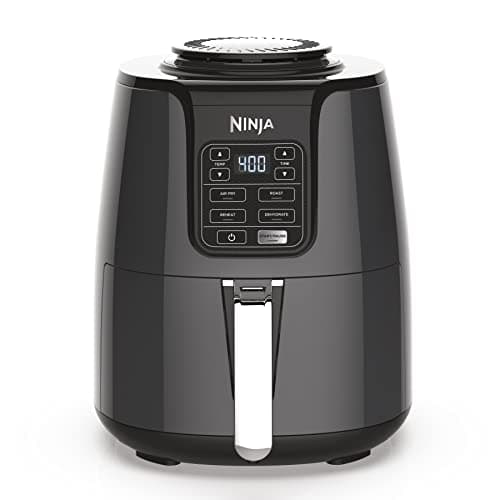
Best Air Fryers
Four 4-quart air fryers compared on footprint and cleaning, including one narrow enough for a galley kitchen.
Our pick: Ninja AF101 Air Fryer, 4 qt
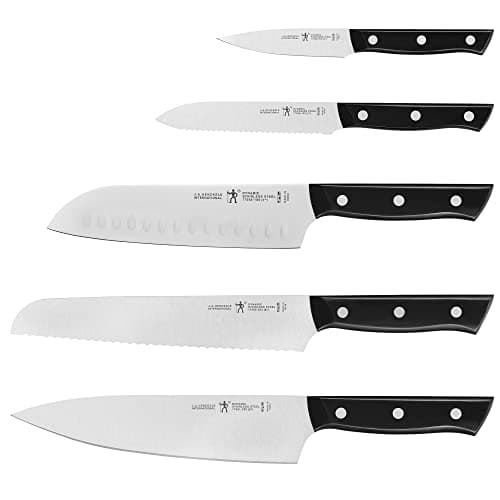
Best Knife Sets
Why a good starter set is three knives, and the four sets worth buying — with and without a block.
Our pick: Henckels Dynamic 5-Piece Knife Set
#ad we may earn a commission · price as of October 6, 2026
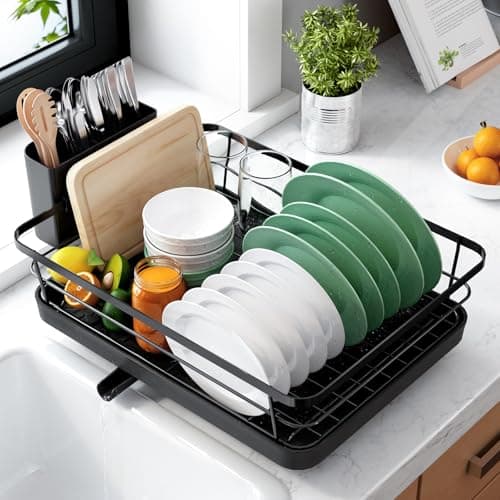
Best Dish Racks
Compact, expandable and sink-draining racks compared — plus why a drip tray you have to empty is a mistake.
Our pick: Kitsure Compact Dish Drying Rack, 12 × 15.5 in
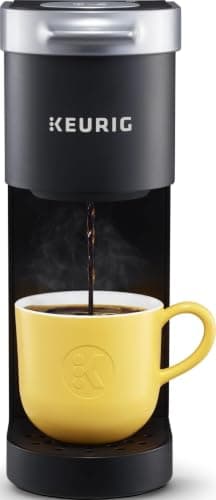
Best Coffee Makers
The narrowest pod machine, the cheapest-per-cup drip, and the arithmetic on which one actually suits you.
Our pick: Keurig K-Mini Single-Serve Coffee Maker
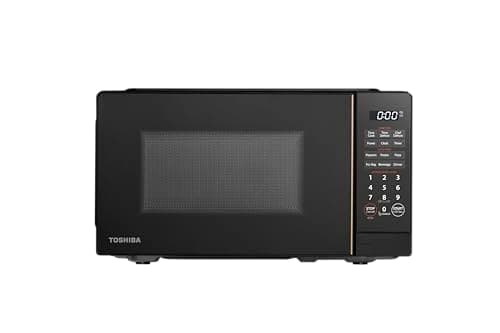
Best Microwaves
Why 0.7 cu ft is the right size, the wattage and circuit checks to make first, and four models compared.
Our pick: Toshiba 0.7 cu ft Countertop Microwave, 700 W
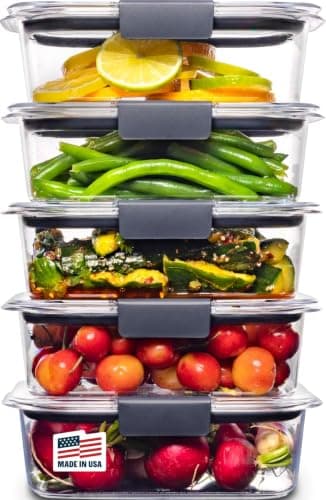
Best Food Storage
Leak-proof plastic, glass for reheating and uniform meal-prep stacks — matched to whether lunch leaves the house.
Our pick: Rubbermaid Brilliance Tritan Plastic Container Set
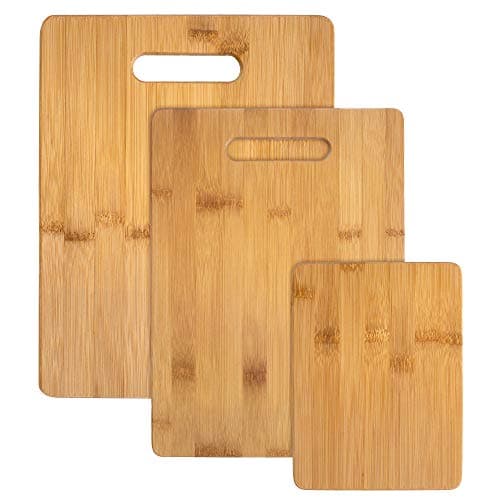
Best Cutting Boards
Bamboo, plastic and color-coded mats compared — plus why glass and stone boards destroy knife edges.
Our pick: Totally Bamboo 3-Piece Reversible Board Set
#ad we may earn a commission · price as of October 6, 2026
Comparison
If there is only room for one appliance, which one — decided by whether your apartment oven actually works.
Comparison
A consumable coating versus a lifetime purchase — including what the coating safety research actually says.
Comparison
Footprint, cost per cup and cleanup compared — plus the $8 filter that gets you most of both.
Comparison
Weight, staining, reheating and the plastics safety question — and how to split a set between both.
Review
Our top cookware pick reviewed: what the nesting saves, how long the coating lasts, who should buy stainless instead.
Review
The default air fryer recommendation reviewed: footprint, cleaning, noise, and when to buy the slim model instead.
Review
The narrowest coffee maker you can buy, reviewed honestly — including the per-cup refill and the annual pod cost.
Checklist
Every line of the kitchen list with a pick, a live price and a buy link — split into day one and week two.
Guide
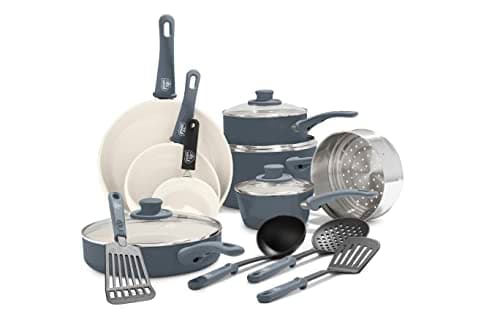
Four pans do nearly everything. What each one is for, what to add later, what to skip entirely.
Guide
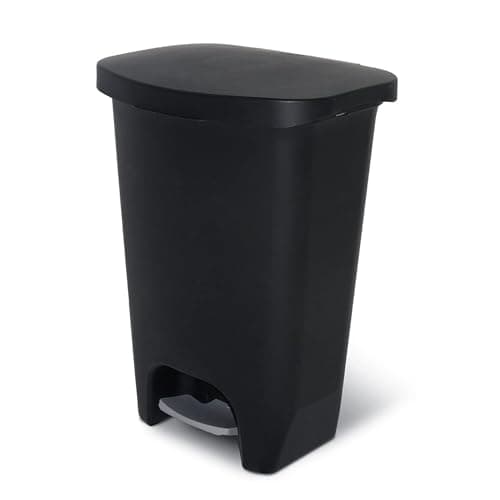
Why 13 gallons is standard, how to size by household, and the bins for a bathroom and recycling.
Guide
Capacity, wattage and counter space explained — plus the circuit check that matters in older buildings.
Guide
A working kitchen for under $300: what to buy cheap, what to buy once, and what to buy used.
If you are setting up an entire apartment, dorm or house rather than shopping for one room, start with the complete checklist — every line has a pick, a live price and a running total.
Seven things for night one: cookware, a knife, a cutting board, a dish rack, a trash can, plates and cutlery, and dish soap. That is about $200 and enough to cook and wash up. The microwave, coffee maker and food storage can wait a week.
About $190 at the budget tier, $420 mid, and $750 buying everything new including a microwave. Buying plates and cutlery used saves roughly $45 of that on its own.
Your main knife, a sharpener, your 10-inch frying pan, and a cutting board that is not glass. Those four affect whether cooking is pleasant. Everything else — colander, bowls, measuring cups, utensils — is identical at every price.
Hold a fridge magnet against the base of the pan. If it sticks, the pan works on induction. If your cooktop is flat glass and stays cool, it is induction and non-magnetic pans will not heat at all — which rules out a lot of aluminum and ceramic-coated sets.
Often not, in an older building. A microwave draws around 1,100 watts and an air fryer 1,400 to 1,700, against about 1,800 usable watts on a 15-amp circuit. Plug both into wall outlets — never a power strip — and move one to a different circuit if the breaker trips.
Plates, bowls, mugs, glasses, cutlery, cast iron, sheet pans, stockpots, mixing bowls and colanders. None wears out in a way that matters. Buy knives, anything nonstick, and cutting boards new — condition affects performance and hygiene there.