How much water does a shower use?
The arithmetic is simple and almost nobody does it: gallons per minute times minutes. Where it gets interesting is the hot water, which is the part you pay twice for.
Top pick
High Sierra Classic 1.8 GPM All-Metal Shower Head
One wide nozzle instead of fifty small ones, so the same 1.8 gallons a minute arrives as heavy droplets rather than a mist. It is the only head here that cannot clog, and the only one made of solid metal.
#ad we may earn a commission · price as of November 13, 2026
Scored 9.5 · A low-flow head that does not feel low-flow. The full ranking and the runners-up are below.
Quick picks
Our ranking at a glance. Tap any row for the full write-up, or the price to go straight to Amazon. Scores are ours, weighing published specs, the design and what owners report after a year — the method is published in full.
| # | Product | Best for | Score | Price |
|---|---|---|---|---|
| 1 | 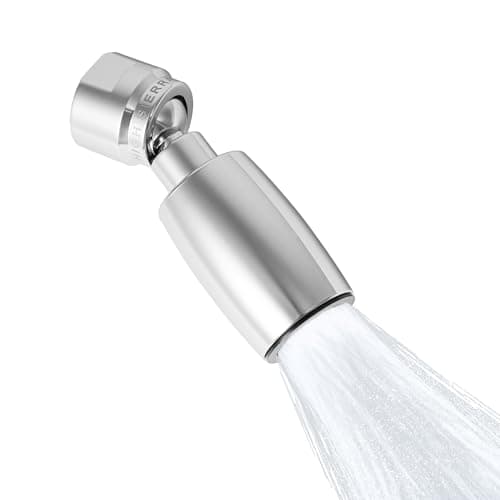 High Sierra Classic 1.8 GPM All-Metal Shower Head A low-flow head that does not feel low-flow | A low-flow head that does not feel low-flow | 9.59.5 out of 10 on our Fits a small bathroom, Value, Durability, Renter-safe scoring | |
| 2 | 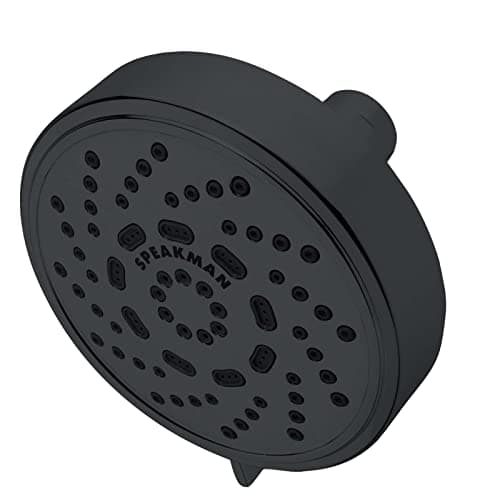 Speakman Echo S-4200 1.75 GPM Multi-Function Shower Head Spray settings at a low flow rate | Spray settings at a low flow rate | 9.49.4 out of 10 on our Fits a small bathroom, Value, Durability, Renter-safe scoring | |
| 3 | 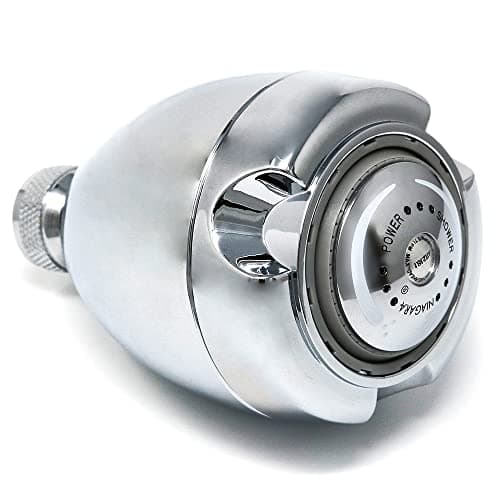 Niagara Earth Spa 1.25 GPM Fixed Shower Head The biggest cut to the water bill | The biggest cut to the water bill | 9.49.4 out of 10 on our Fits a small bathroom, Value, Durability, Renter-safe scoring | |
| 4 | 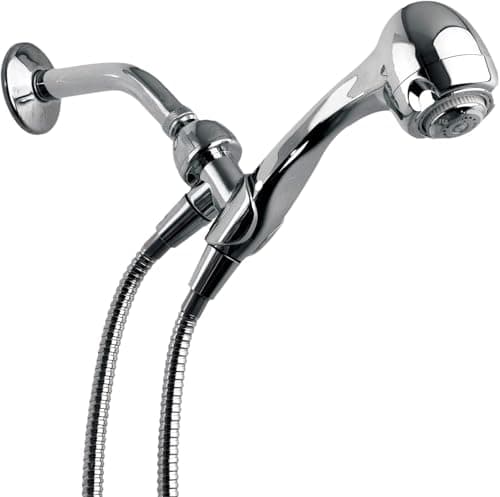 Niagara Earth Spa 1.25 GPM Handheld Shower Head Low flow you can still point at the tub | Low flow you can still point at the tub | 9.49.4 out of 10 on our Fits a small bathroom, Value, Durability, Renter-safe scoring |
#ad — Amazon links on this page are affiliate links. How this site is funded.
A 10-minute shower uses about 25 gallons at the 2.5 gpm federal maximum, 20 gallons at the 2.0 gpm WaterSense level, and about 12.5 gallons at 1.25 gpm. Roughly two-thirds to three-quarters of that is hot water, which is why the shower head is an energy decision as much as a water one — and it is the cheapest energy decision available in a rental, because a head costs less than a month of the difference.
Two numbers are doing all the work here, and both are printed on the box: the flow rate, and how long you stand there. You can only change one of them by shopping.
Scores above weigh published specifications, the design and consistent owner-reported experience over time. See how we pick.
The gallons, by flow rate and shower length
| Flow rate | 5 minutes | 10 minutes | 20 minutes |
|---|---|---|---|
| 2.5 gpm (federal maximum) | 12.5 gal | 25 gal | 50 gal |
| 2.0 gpm (WaterSense level) | 10 gal | 20 gal | 40 gal |
| 1.8 gpm | 9 gal | 18 gal | 36 gal |
| 1.25 gpm (efficient) | 6.25 gal | 12.5 gal | 25 gal |
Read along the 10-minute column: moving from the federal ceiling to an efficient head saves about half the water per shower, and moving from 10 minutes to 5 saves the same again. Both levers are the same size, which is worth knowing before you spend anything.
What the standards actually say
- 2.5 gpm is the federal maximum for shower heads sold in the US, measured at a specified pressure. Anything advertised above it is not a US-market fixture.
- WaterSense means 2.0 gpm or less, and tested for performance. That second half is the point: EPA’s label covers spray force and coverage as well as flow, which is what separates an efficient head from a weak one.
- Some states set lower limits than the federal ceiling. If you are buying in California, Colorado, New York or Washington among others, check the state rule rather than assuming 2.5 gpm is fine.
- Pressure-compensating designs hold the flow steady. A head that compensates for incoming pressure gives you the same spray on a weak supply as a strong one, which is why some 1.25 gpm heads feel stronger than a 2.5 gpm head on a bad riser.
The hot water, which is the expensive half
Water heating is one of the largest energy loads in a home, and a shower is the largest single draw on it. The practical consequences in an apartment:
- You pay for the gallons twice. Once to the water utility, once to heat them. In a building where hot water is included in rent you pay only the first, which is why the saving varies so much between leases.
- A smaller flow rate means the tank lasts longer. The real-world complaint in older buildings is running out of hot water, and a 1.25 gpm head roughly doubles how long a given tank lasts. That is a comfort upgrade, not just a bill one.
- Turning the temperature down does nothing to the gallons. It cuts the energy, not the water. The head cuts both.
DOE’s guidance on reducing hot water use puts efficient shower heads and shorter showers at the top of the list for exactly this reason: they are the two changes that cost nothing ongoing.
Putting a number on it
Water and energy prices vary enormously by city, so rather than invent a national figure, here is how to work out yours in two minutes:
- Find the price per 1,000 gallons on your water bill. Divide by 1,000 for the cost per gallon.
- Multiply by the gallons in the table above for your head and your shower length, times the number of showers in a month.
- Then roughly double it to allow for heating, if you pay for hot water. That gives you the number that decides whether a $17 head pays for itself, and in most metered apartments with daily showers it does inside a couple of months.
If you do not pay for water at all, the honest answer is that the efficient head is still worth fitting in an older building — for the hot water lasting, not the bill.
Which head cuts it without making the shower worse
- The all-metal efficient head: the pick if you want one purchase that lasts and a shower that does not feel reduced.
- Pressure-compensating at 1.25 gpm: the biggest saving here, and the one to buy in a building where the hot water runs out.
- Handheld at the same efficient flow rate: if you also want to rinse the tub or wash a dog.
- A multi-function efficient head: if other people in the house want a massage setting and will not accept a single spray.
Fitting any of them is a five-minute job — how to install a shower head — and the full ranking is the best low-flow shower heads.
The short version
- A 10-minute shower is about 25 gallons at 2.5 gpm, 20 at 2.0 gpm and 12.5 at 1.25 gpm.
- 2.5 gpm is the US federal maximum; WaterSense means 2.0 gpm or less plus tested spray performance.
- Several states set limits below the federal ceiling — check yours before buying a 2.5 gpm head.
- Most of a shower is hot water, so the head is an energy decision as well as a water one.
- In an older building, a low-flow head roughly doubles how long the hot water tank lasts.
- Shortening the shower and changing the head are levers of about the same size.
The picks in detail
#ad we may earn a commission · price as of November 13, 2026
#1 · A low-flow head that does not feel low-flow
High Sierra Classic 1.8 GPM All-Metal Shower Head
One wide nozzle instead of fifty small ones, so the same 1.8 gallons a minute arrives as heavy droplets rather than a mist. It is the only head here that cannot clog, and the only one made of solid metal.
- Fits a small bathroom
- 9.4
- Value
- 9.1
- Durability
- 9.7
- Renter-safe
- 9.7
What we like
- Large, heavy droplets rinse thick hair and conditioner properly at a low flow
- One wide bore cannot be plugged by scale, sand or rust — nothing to descale
- Metal body instead of chrome-plated plastic, so the finish does not flake
Good to know
Two to three times the price of the plastic heads here
Specifications
- 1.8 GPM, WaterSense certified (High Sierra lists the label on its 1.25, 1.5 and 1.8 GPM models)
- Patented single-nozzle design — High Sierra calls it a never-clog guarantee
- Solid lead-free, corrosion-resistant metal body
- Engineered and built in the USA from domestic and imported parts
Who it is for
Anyone who has tried a cheap low-flow head, hated it, and assumed low flow was the problem. It was the nozzle count.
#ad we may earn a commission · price as of November 13, 2026
#2 · Spray settings at a low flow rate
Speakman Echo S-4200 1.75 GPM Multi-Function Shower Head
Speakman's low-flow Echo keeps three spray settings and 84 self-cleaning jets at 1.75 GPM, and carries a limited lifetime consumer warranty — rare at this price in any flow rate.
- Fits a small bathroom
- 9.3
- Value
- 9.2
- Durability
- 9.4
- Renter-safe
- 9.7
What we like
- Keeps real spray options instead of dropping to one pattern to hit the flow rate
- Self-cleaning jets, so scale does not slowly redirect the spray
- Limited lifetime consumer warranty from a long-established showering brand
Good to know
Speakman's spec sheet does not list a WaterSense label for this model, though 1.75 GPM is under the 2.0 GPM ceiling
Specifications
- 1.75 GPM (the Echo is also sold in 1.5, 2.0 and 2.5 GPM)
- 84 self-cleaning jets across a 4.37 in face
- Three spray settings, changed by rotating the handle
- Limited lifetime warranty for consumer use (1 year commercial)
Who it is for
Someone cutting flow who still wants a massage setting. If you only ever use one pattern, buy the High Sierra instead.
#ad we may earn a commission · price as of November 13, 2026
#3 · The biggest cut to the water bill
Niagara Earth Spa 1.25 GPM Fixed Shower Head
Half the federal maximum flow for under twenty dollars, with a pressure compensator that holds the rate steady instead of dribbling when the building pressure drops.
- Fits a small bathroom
- 9.6
- Value
- 9.7
- Durability
- 9.1
- Renter-safe
- 9.7
What we like
- The largest water and water-heating saving of any pick here
- Pressure compensation means it does not surge and sag with the building
- Cheap enough to buy, try, and keep the original head in a bag either way
Good to know
1.25 GPM is genuinely less water and you will notice it rinsing long hair
Specifications
- 1.25 GPM — half the 2.5 GPM federal maximum; the chrome N2912CH is WaterSense certified
- Three spray settings: 9-jet spray, shower and combo
- Patented Equiforce pressure compensation, rated to hold flow from 30 to 80 psi
- ABS body with a metal ball joint; non-aerated spray loses less heat
Who it is for
A renter paying the water bill, or anyone on a well or a metered supply who wants the saving to show up this month.
#ad we may earn a commission · price as of November 13, 2026
#4 · Low flow you can still point at the tub
Niagara Earth Spa 1.25 GPM Handheld Shower Head
The same patented pressure compensation on a 72-inch hose, which is the version to buy if you also have to rinse a tub, a dog or a bath mat — jobs a fixed head makes needlessly hard.
- Fits a small bathroom
- 9.4
- Value
- 9.3
- Durability
- 9.2
- Renter-safe
- 9.7
What we like
- A handheld is the one shower upgrade that also makes cleaning the bathroom easier
- Same pressure compensation as the fixed Niagara, so the flow stays predictable
- Matches the cheapest head here on flow rate, so nothing is given up on the water bill
Good to know
A hose and bracket add two more joints that can eventually drip
Specifications
- 1.25 GPM — the lowest flow rate Niagara makes, and half the 2.5 GPM federal maximum
- Three spray settings, with patented pressure-compensation technology
- 72 in stainless-steel hose and mounting bracket, with an integrated backflow preventer
- High impact-resistant polycarbonate body; WaterSense compliant and ANSI, NSF, ASME and CSA listed (model N2942CH)
Who it is for
A rental with a tub you have to scrub, or anyone who wants to wash without running water over their whole body.
Our recommendation
If you read nothing else on this page, this is the short version.
Buy this one
High Sierra Classic 1.8 GPM All-Metal Shower Head
Anyone who has tried a cheap low-flow head, hated it, and assumed low flow was the problem. It was the nozzle count.
#ad we may earn a commission · price as of November 13, 2026
Or this one, if High Sierra Classic All-Metal is not the fit
Speakman Echo S-4200 1.75 GPM Multi-Function Shower Head
Someone cutting flow who still wants a massage setting. If you only ever use one pattern, buy the High Sierra instead.
#ad we may earn a commission · price as of November 13, 2026
Common questions
How much water does a 10-minute shower use?
About 25 gallons with a shower head at the 2.5 gpm federal maximum, 20 gallons at the 2.0 gpm WaterSense level, and roughly 12.5 gallons with an efficient 1.25 gpm head. The arithmetic is just flow rate times minutes, and the flow rate is printed on the box or the face of the head.
What is a good flow rate for a shower head?
2.0 gpm or less, and ideally a WaterSense-labelled head, because that label covers spray performance as well as flow — which is the difference between efficient and weak. 1.25 gpm pressure-compensating heads go further and can feel stronger than a 2.5 gpm head on a weak supply. The federal ceiling is 2.5 gpm and some states are lower.
Does a low-flow shower head really save money?
It saves water and, more significantly, the energy used to heat that water — so the saving depends on whether your lease includes hot water. Where you pay for both, a head in the $17 to $45 range typically pays for itself within a couple of months of daily showers. Where hot water is included, the benefit is that the tank lasts longer rather than a lower bill.
Is a shower cheaper than a bath?
Usually, and the crossover is the length of the shower. A standard tub holds roughly 30 to 50 gallons of water to a usable depth, which a 2.5 gpm head matches in about 12 to 20 minutes and a 1.25 gpm head takes twice as long to reach. A short shower with an efficient head is far cheaper than a bath; a twenty-minute shower at the federal maximum is not.
Does turning the water temperature down save water?
No — it saves energy, not gallons. The flow rate sets the water used; the thermostat sets how much of it is heated. Changing the head is the only purchase that reduces both at once, which is why DOE guidance on hot water puts efficient shower heads and shorter showers at the top of the list.
Sources
Read next
- Best low-flow shower headsThe heads that cut the gallons without cutting the shower.
- How to install a shower headFive minutes, no tools, fully reversible.
- Best shower heads for low water pressureIf the problem is pressure rather than cost.
- Apartment laundry without a washerThe other place water and money meet in a rental.
- The bathroom essentials checklistEverything else the room needs.