The best blenders for a small apartment
In a kitchen with eighteen inches of free counter, the question is not which blender is most powerful. It is which one you will still own in a year, because the rest get put in a cabinet and forgotten.
Best small-apartment blender
Ninja Fit Compact Personal Blender (QB3001SS)
A 700-watt base the size of a travel mug with two 16-ounce cups that double as the jar and the glass you drink from. It handles the one job a first-apartment blender is actually bought for, and it stores in a cabinet instead of living on the counter.
#ad we may earn a commission · price as of November 13, 2026
Scored 9.5 · A small kitchen, full stop. The full ranking and the runners-up are below.
Quick picks
Our ranking at a glance. Tap any row for the full write-up, or the price to go straight to Amazon. Scores are ours, weighing published specs, the design and what owners report after a year — the method is published in full.
| # | Product | Best for | Score | Price |
|---|---|---|---|---|
| 1 | 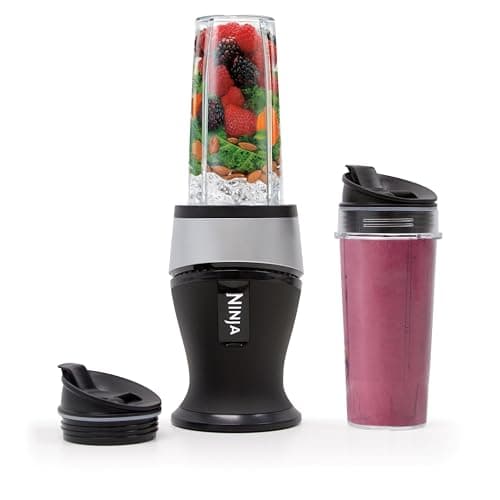 Ninja Fit Compact Personal Blender (QB3001SS) A small kitchen, full stop | A small kitchen, full stop | 9.59.5 out of 10 on our Fits a small kitchen, Value, Durability, Easy to clean scoring | |
| 2 | 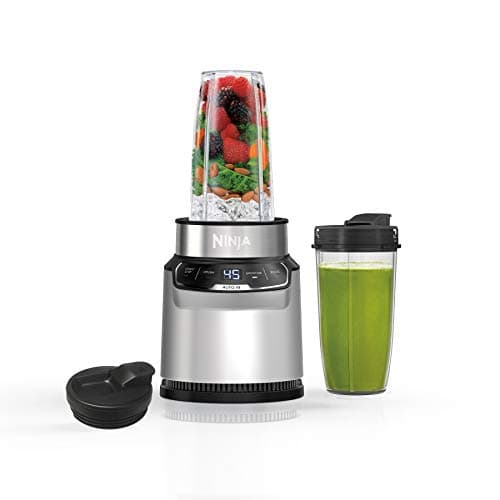 Ninja Nutri-Blender Pro with Auto-iQ (BN401) Frozen fruit and ice, every day | Frozen fruit and ice, every day | 9.49.4 out of 10 on our Fits a small kitchen, Value, Durability, Easy to clean scoring | $79.99View on Amazon $109.99 · 27% off |
| 3 | 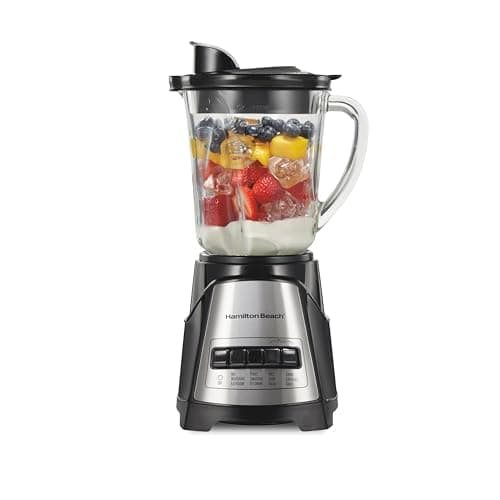 Hamilton Beach Power Elite 40 oz Jar Blender (58148AG) Blending for two, and for soup | Blending for two, and for soup | 9.29.2 out of 10 on our Fits a small kitchen, Value, Durability, Easy to clean scoring | |
| 4 | 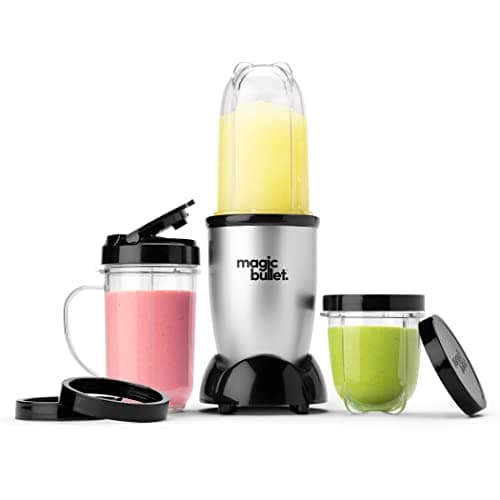 magic bullet Personal Blender (MBR-1101) The cheapest known-brand option | The cheapest known-brand option | 9.29.2 out of 10 on our Fits a small kitchen, Value, Durability, Easy to clean scoring | $29.97View on Amazon $39.99 · 25% off |
| 5 | 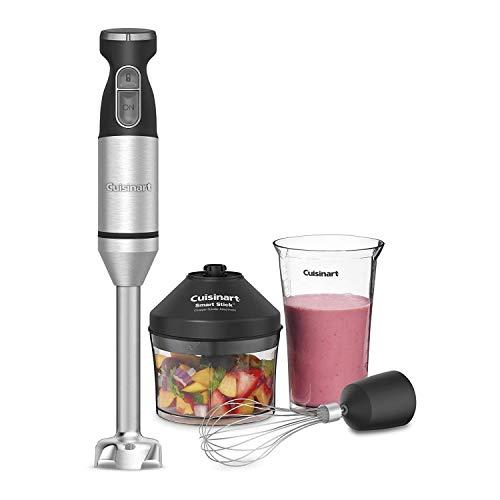 Cuisinart Smart Stick Hand Blender (CSB-179) A kitchen with no counter space at all | A kitchen with no counter space at all | 9.39.3 out of 10 on our Fits a small kitchen, Value, Durability, Easy to clean scoring | $59.95View on Amazon $79.95 · 25% off |
#ad — Amazon links on this page are affiliate links. How this site is funded.
Buy the Ninja Fit. It is a 700-watt personal blender with a base roughly the size of a coffee mug and two 16-ounce cups that are both the jar and the glass you drink from, so there is no pitcher to wash and nothing permanently parked on the counter. If frozen fruit and ice are the whole reason you want a blender, step up to the Ninja Nutri-Blender Pro. If you need to blend for two or make soup, the Hamilton Beach Power Elite is the cheapest way to own a real 40-ounce jar.
Our own kitchen hub puts a blender in the “later, if at all” column, and we stand by that: it is not a night-one purchase. But “later, if at all” is not “never,” and if you drink a smoothie most mornings it becomes one of the few small appliances that earns a permanent spot. The mistake is buying the blender you grew up with, which was sized for a kitchen that had counter to spare.
Scores below weigh published specifications, the physical design and consistent owner-reported experience over time. See how we pick.
How we picked: four things, in this order
Every roundup needs its criteria stated before its winners, because the ranking is nothing but the criteria applied. For a small apartment, ours are:
- Stored footprint, not counter footprint. The number that decides whether you keep using a blender is how much space it takes up when it is not blending. A personal blender base fits in the cabinet with the mugs. A 40-ounce jar blender does not fit anywhere, so it lives on the counter, where it competes with the toaster, the coffee maker and the dish rack.
- Whether you can drink out of it. This sounds trivial and it is the single biggest predictor of continued use. A blend-and-go cup means one item to rinse. A jar means a jar, a lid, a blade assembly and a glass — four things, in a sink you share.
- Watts, but only up to a point. Below about 500 watts, frozen fruit and ice win. Between 700 and 1,100 watts the difference is noticeable on ice and invisible on everything else. Above that you are paying for a machine built for a kitchen with room for it.
- What the sink and the dishwasher can cope with. A rental dishwasher, where there is one at all, is often a slimline unit. A 40-ounce glass jar takes up most of the top rack on its own.
Notice what is not on that list: number of speeds, preset programs for things you will never make, and jar material on a machine whose jar you are not going to buy. Twelve push-button functions is one function and a sticker.
Personal, jar or immersion: pick the format first
There are three genuinely different machines sold as “blenders,” and choosing between them matters far more than choosing between two models of the same kind. Most people who are unhappy with their blender bought the wrong format.
| Personal (single-serve) | Jar (countertop) | Immersion (stick) | |
|---|---|---|---|
| Stored size | Base fits in a cabinet | Lives on the counter | Flat in a drawer |
| Smoothies with frozen fruit | Yes, at 700 W and up | Yes | No |
| Soup | No — hot liquid in a sealed cup is unsafe | Yes | Yes, best here |
| Blends for two at once | No | Yes | Yes, in the pot |
| Things to wash | One cup | Jar, lid, blades, glass | One shaft |
| Salsa, pesto, hummus | Small batch only | Yes | Yes |
| Typical price band | Low to mid | Lowest for the capacity | Mid |
The honest summary: if you blend one smoothie at a time, buy a personal blender. If you cook — soups, sauces, a batch of salsa — buy an immersion blender and do not buy a countertop machine at all. Buy a jar blender only if you genuinely need two servings at once, which in practice means two people in the apartment.
A lot of first-apartment kitchens end up with the combination that costs least and works best: a cheap personal blender for smoothies and a stick blender for cooking. Together they are still less counter space than one jar blender, and they cover more ground.
What wattage actually buys, in plain terms
Wattage is the number on the box and the least useful thing on it, because it describes the motor and not the result. What you care about is whether frozen strawberries become a smoothie or a slushy with lumps in it. Three rough bands, from published specifications and consistent owner reports:
- Around 250 watts — soft ingredients. Banana, yogurt, protein powder, milk, spinach, salad dressing. Frozen fruit only if you thaw it slightly and add liquid first. This is where the magic bullet sits, and it is why it is cheap.
- 700 watts — frozen fruit, reliably, if you put the liquid in first and the frozen things on top. Ice cubes with effort. This covers what almost everyone actually makes.
- 1,000 to 1,100 peak watts — ice from frozen without negotiation, and frozen fruit with no technique required. Worth it for a daily habit.
Two things to know about the number itself. First, “peak watts” is a measurement taken at the moment of maximum draw rather than sustained output, so an 1,100 peak-watt machine is not twice as capable as a 550-watt one. Second, blade design and cup shape do as much work as the motor — a narrow single-serve cup forces ingredients back down into the blades in a way a wide jar does not, which is why a 700-watt personal blender can out-blend a 700-watt pitcher on frozen fruit.
The loading technique matters more than either number: liquid in first, soft ingredients next, frozen and hard things last. Load it the other way round and the blades spin in an air pocket, which is the noise a blender makes when nothing is happening.
The apartment problem: counters and circuits
Two constraints specific to renting, and both of them catch people out.
Measure the clearance under your upper cabinets, not just the counter. Counter-to-cabinet height in a rental kitchen is usually around 18 inches. A personal blender with the cup attached measures roughly 12 to 15 inches depending on the cup, which fits. A tall jar blender does not, and an appliance you have to pull forward every single time is one you stop using by week three. This is the same measuring discipline we push for air fryers and microwaves, and it is the reason most small-appliance returns happen.
A blender is a short, high-draw load. In an older building the kitchen may share a 15-amp circuit with the living room, which gives you about 1,800 usable watts. An 1,100 peak-watt blender running at the same time as a 1,100-watt microwave can trip the breaker. It only runs for ninety seconds, so it is a smaller problem than the microwave-plus-air-fryer collision, but plug it straight into a wall outlet rather than a power strip — high-draw motors on thin extension cords are a genuine fire risk, not a technicality.
What to skip
Bullet-style blenders under about 250 watts. There is a floor below which a blender is not a cheap blender, it is a disappointment with a cup. If the listing does not state wattage at all, assume it is below the floor.
Cordless and USB-rechargeable “portable” blenders. The ones sold as gym bottles. Small motors, small batteries, a plastic cup that scratches, and the one job they claim — blending away from an outlet — is a job almost nobody has. A dorm room and a first apartment both have outlets.
Blender and food processor combination machines. A jar blender with a bolt-on chopping bowl gives you a mediocre version of both plus two bulky attachments to store. Our kitchen starter-kit budget treats cabinet space as a currency, and a combination machine spends a lot of it.
Glass jars, if the blender is going to live in a cabinet. Glass is genuinely better than plastic — it does not scratch, cloud or hold the smell of onion — but it is heavy, and a heavy jar lifted in and out of a low cabinet twice a day eventually gets dropped. Glass is the right choice for a blender that stays out on the counter, which is exactly the trade the Hamilton Beach makes.
Any machine whose selling point is a number of speeds. In real use a blender has two settings: on, and pulse. Everything between them is marketing.
Making a cheap blender last
Blenders in this price range almost never fail at the motor. They fail at three places, and all three are avoidable.
- The cup threads. On twist-lock personal blenders, the plastic collar that screws onto the blade assembly is the part that cracks, usually because it was tightened onto grit. Rinse the rim before you twist it on, and do not run the cups through a hot dishwasher cycle every single time even where the listing says you can — repeated heat cycling is what makes thin plastic brittle.
- The blade bearing. Water sitting in the blade assembly rusts the bearing, and a rough bearing is the grinding noise that precedes the end. Rinse, shake it out and leave it blade-up to dry rather than screwing it back together wet.
- The drive coupling. The plastic dog that transfers motor rotation to the blades strips when the blades are jammed, which happens when you load frozen fruit with no liquid and hold the button down. Pulse it instead. If nothing is moving, adding liquid solves it and holding the button never does.
The thirty-second clean is the other half: fill the cup or jar halfway with warm water and a drop of dish soap, run it for ten seconds, rinse. Done immediately it removes everything. Done tomorrow it removes nothing, and dried smoothie is the hardest thing in a first kitchen to get off a plastic surface.
The short version
- Pick the format before the model: personal for smoothies, immersion for soup and sauces, jar only if you blend for two.
- The Ninja Fit is the default for a small kitchen — 700 W, a mug-sized base, and the cup is the glass.
- 700 watts handles frozen fruit if you put the liquid in first; 250 watts does not, at any price.
- A 40 oz jar blender is the cheapest capacity and the most expensive counter space. Buy it only if you need two servings at once.
- Measure counter-to-cabinet clearance before ordering — about 18 inches in most rentals, and an appliance you have to slide forward is one you stop using.
- Cheap blenders fail at the cup threads, the blade bearing and the drive coupling, and all three come from loading it wrong or putting it away wet.
Every pick in detail
#ad we may earn a commission · price as of November 13, 2026
#1 · A small kitchen, full stop
Ninja Fit Compact Personal Blender (QB3001SS)
A 700-watt base the size of a travel mug with two 16-ounce cups that double as the jar and the glass you drink from. It handles the one job a first-apartment blender is actually bought for, and it stores in a cabinet instead of living on the counter.
- Fits a small kitchen
- 9.7
- Value
- 9.4
- Durability
- 9.2
- Easy to clean
- 9.6
What we like
- The footprint is the point — roughly the base area of a coffee mug
- You blend and drink from the same cup, so there is no jar to wash
- 700 W is genuinely enough for frozen fruit if you add liquid first
Good to know
Single-serve only: 16 oz is one smoothie, not two, and there is no big jar option
Specifications
- 700-watt motor base
- Two 16 oz to-go cups with spout lids
- Pro Extractor blades; single-serve design with no full jar
- Cups and lids are dishwasher safe
Who it is for
Anyone blending for one in a kitchen with about eighteen inches of free counter. Skip it if you want to make soup, salsa or two servings at once.
$109.99 · 27% off
#ad we may earn a commission · price as of November 13, 2026
#2 · Frozen fruit and ice, every day
Ninja Nutri-Blender Pro with Auto-iQ (BN401)
The same single-serve format with 1,100 peak watts and two Auto-iQ programs, which is the difference between a smoothie and a drink with ice chips in it. Buy this one if frozen fruit is the whole reason you want a blender.
- Fits a small kitchen
- 9.4
- Value
- 9.1
- Durability
- 9.4
- Easy to clean
- 9.6
What we like
- Crushes frozen fruit and ice properly — the clearest step up in this roundup
- The presets run a timed pulse-and-blend cycle so you are not holding a button
- 24 oz cups make a real portion, not a tasting glass
Good to know
Roughly twice the price of the Ninja Fit for a difference you only notice on ice
Specifications
- 1,100 peak watts
- Two Auto-iQ preset programs plus manual pulse
- Two 24 oz to-go cups with spout lids
- Dishwasher-safe cups, lids and blade assembly
Who it is for
A daily frozen-smoothie habit. If you blend twice a month, the Fit is the smarter buy and the money is better spent elsewhere in the kitchen.
#ad we may earn a commission · price as of November 13, 2026
#3 · Blending for two, and for soup
Hamilton Beach Power Elite 40 oz Jar Blender (58148AG)
The cheapest way to own a real jar blender. A 40-ounce glass jar and 700 watts will do a pitcher of smoothies, a blended soup or a jar of salsa, which no single-serve machine will.
- Fits a small kitchen
- 8.7
- Value
- 9.6
- Durability
- 9.3
- Easy to clean
- 9.2
What we like
- A glass jar does not scratch, cloud or hold onion smell the way plastic does
- Big enough for two servings, soup, salsa and pancake batter
- Costs less than most single-serve blenders
Good to know
The footprint is the whole problem — it is tall and it will live on the counter
Specifications
- 40 oz glass jar
- 700-watt motor, 12 push-button functions
- Wave Action system pulls the mix down into the blades
- Jar, lid and blades are dishwasher safe
Who it is for
Two people in the apartment, or anyone who wants to blend soup. Not the pick if your counter is already full.
$39.99 · 25% off
#ad we may earn a commission · price as of November 13, 2026
#4 · The cheapest known-brand option
magic bullet Personal Blender (MBR-1101)
The one everybody recognizes, and the honest reason to buy it is price and the three cups it comes with. At 250 watts it is a soft-ingredient machine, and the listing does not pretend otherwise.
- Fits a small kitchen
- 9.6
- Value
- 9.3
- Durability
- 8.7
- Easy to clean
- 9.5
What we like
- The smallest footprint here alongside the Ninja Fit
- Comes with enough cups that two people can each have one
- Cheap enough to be a reasonable gamble if you are not sure you will use it
Good to know
250 W is a third of the Ninja Fit — frozen fruit and ice will defeat it
Specifications
- 250-watt motor base
- 22 oz cup plus additional to-go cups and a travel lid
- Cups and lids are dishwasher safe
- Twist-to-blend operation
Who it is for
Soft smoothies, protein shakes and salad dressings on the tightest possible budget. If frozen fruit is the plan, spend the extra on the Ninja Fit.
$79.95 · 25% off
#ad we may earn a commission · price as of November 13, 2026
#5 · A kitchen with no counter space at all
Cuisinart Smart Stick Hand Blender (CSB-179)
Not a blender in the countertop sense, and that is the appeal: it blends in the pot or the cup you are already using and then goes in a drawer. For soup it is better than anything else here.
- Fits a small kitchen
- 9.7
- Value
- 8.9
- Durability
- 9.5
- Easy to clean
- 9.7
What we like
- Zero counter footprint — it stores flat in a drawer
- Blends soup directly in the pot, with no transferring hot liquid to a jar
- Nothing to wash but the shaft
Good to know
It will not make a frozen smoothie — that is not what an immersion blender does
Specifications
- Variable-speed control with a lock/unlock button
- Stainless steel blending shaft
- One-hand operation; corded
- Detachable shaft is dishwasher safe
Who it is for
Someone who cooks soup and sauces and has no counter to spare. Pair it with nothing; it is a complement to a cheap personal blender, not a replacement.
Our recommendation
If you read nothing else on this page, this is the short version.
Buy this one
Ninja Fit Compact Personal Blender (QB3001SS)
Anyone blending for one in a kitchen with about eighteen inches of free counter. Skip it if you want to make soup, salsa or two servings at once.
#ad we may earn a commission · price as of November 13, 2026
Or this one, if Ninja Fit Compact is not the fit
Ninja Nutri-Blender Pro with Auto-iQ (BN401)
A daily frozen-smoothie habit. If you blend twice a month, the Fit is the smarter buy and the money is better spent elsewhere in the kitchen.
$109.99 · 27% off
#ad we may earn a commission · price as of November 13, 2026
Common questions
What is the best blender for a small apartment?
The Ninja Fit, for most people. It is a 700-watt personal blender whose base takes up about as much room as a coffee mug, and the two 16-ounce cups serve as both the blending jar and the glass, so nothing needs to stay on the counter and there is no pitcher to wash. Step up to the Ninja Nutri-Blender Pro if you blend frozen fruit or ice every day, and choose the Hamilton Beach Power Elite only if you need two servings at once or you want to blend soup.
How many watts do you need in a blender for frozen fruit?
About 700 watts, with the liquid loaded first and the frozen fruit on top. At roughly 250 watts — the bullet-style budget machines — frozen fruit stalls the blades no matter how long you hold the button down. Around 1,000 to 1,100 peak watts handles ice from frozen with no technique at all, which is worth paying for if you make a frozen smoothie most days and is wasted money if you do not.
Is a personal blender enough, or do you need a full-size one?
Enough, for one person making smoothies, shakes and dressings. A full-size jar buys you exactly two things a single-serve cup cannot do: more than one serving at a time, and hot liquid, which must never go into a sealed single-serve cup because the expanding steam has nowhere to go. If neither of those describes how you cook, the jar is a large object on your counter earning nothing.
Can you blend hot soup in a personal blender?
No. Sealing hot liquid into a twist-lock cup traps expanding steam, and the cup can blow off the base or crack. For soup, use an immersion blender directly in the pot — that is the format’s entire reason to exist — or a vented jar blender filled no more than halfway with the lid’s center cap removed.
Do you need both a blender and a food processor in a first apartment?
No, and you should deliberately own neither for the first few months. Pick one later based on what you actually cook: a blender for anything that ends up liquid, a food processor for anything that stays solid — chopping, shredding, pastry. Combination machines do both jobs adequately and store badly, which in a kitchen with two upper cabinets is the deciding factor.
Why do cheap blenders stop working?
Rarely the motor. The usual failures are a cracked cup thread from tightening onto grit, a rusted blade bearing from being put away wet, and a stripped plastic drive coupling from holding the button down while the blades are jammed in frozen fruit. Pulse instead of holding, add liquid before frozen ingredients, and let the blade assembly dry separately — that is most of the difference between two years and six.
Sources
Read next
- First-apartment kitchen checklistEvery line of the room, with a pick and a price on each.
- Apartment kitchen starter kit on a budgetWhat the whole kitchen costs if you buy it all at once.
- Best coffee makers for a small kitchenThe other appliance competing for the same counter inches.
- Best air fryers for a small kitchenMeasure the cabinet clearance before this one too.
- Best electric kettles for a dormThe same footprint-first logic, applied to a desk.