Glass vs plastic food storage containers
Glass for reheating at home, plastic for anything that leaves the house. Most kitchens genuinely want both — here is how to split them.
Quick picks
Our ranking at a glance. Tap any row for the full write-up, or the price to go straight to Amazon. Scores are ours, from published specs and what owners report after a year — we have not lab-tested these, and we say so plainly.
| # | Product | Best for | Score | Price |
|---|---|---|---|---|
| 1 | 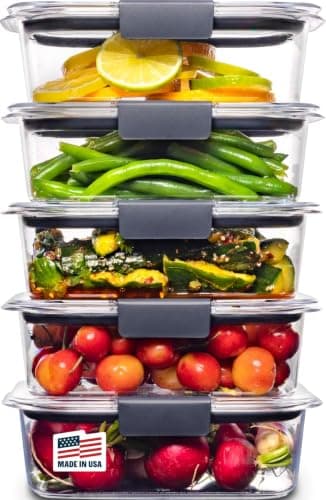 Rubbermaid Brilliance Tritan Plastic Container Set Leftovers that travel | Leftovers that travel | 8.88.8 out of 10 on our Fits a small kitchen, Value, Durability, Easy to clean scoring | $23.73View on Amazon $32.48 · 27% off |
| 2 | 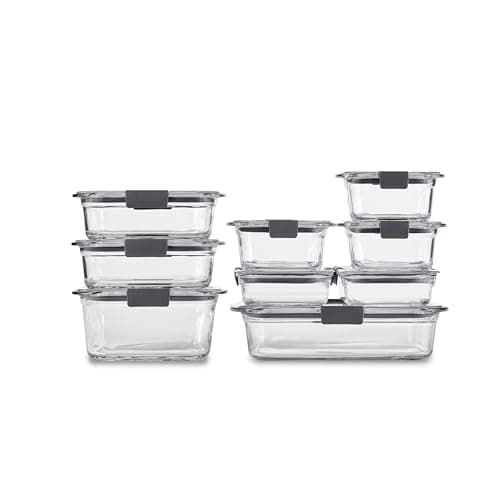 Rubbermaid Brilliance Glass Set of 9 Reheating without the plastic question | Reheating without the plastic question | 8.38.3 out of 10 on our Fits a small kitchen, Value, Durability, Easy to clean scoring | $59.99View on Amazon $79.99 · 25% off |
| 3 | 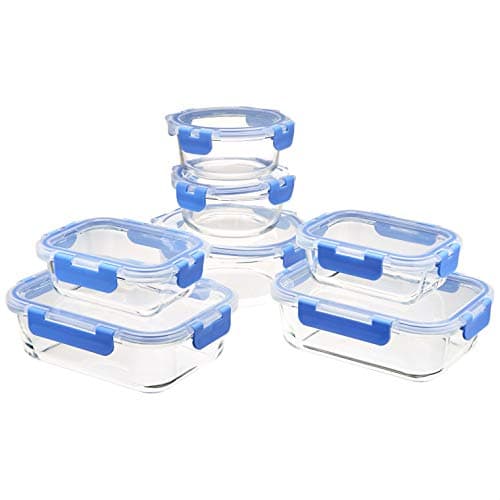 Amazon Basics Glass Food Storage Containers Glass on a budget | Glass on a budget | 8.48.4 out of 10 on our Fits a small kitchen, Value, Durability, Easy to clean scoring | $18.69View on Amazon $22.03 · 15% off |
| 4 | 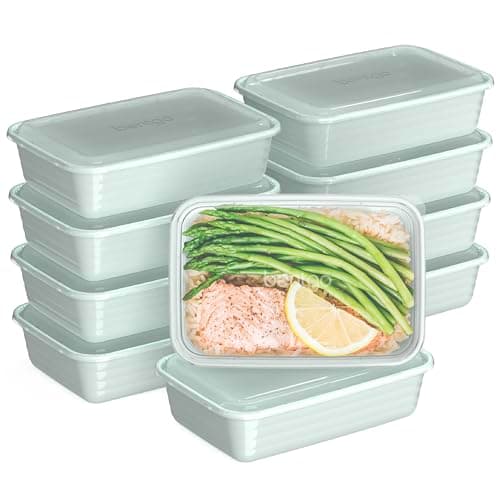 Bentgo Prep 20-Piece Meal Prep Containers Cooking Sunday for the week | Cooking Sunday for the week | 8.58.5 out of 10 on our Fits a small kitchen, Value, Durability, Easy to clean scoring |
#ad — Amazon links on this page are affiliate links. How this site is funded.
Buy plastic for food that travels and glass for food you reheat at home. Glass does not stain or hold odors and can go in the oven; plastic is about a third of the weight and half the price. A sensible first kitchen has roughly six plastic and four glass.
Side by side
| Plastic (Tritan / PP) | Glass | |
|---|---|---|
| Weight, 4-cup container | About 5 oz | About 1 lb 2 oz |
| Carried in a bag | Easy | Heavy, and breaks if dropped |
| Microwave | Safe (check the base symbol) | Safe |
| Oven | No | Yes, without the lid |
| Freezer | Yes, leave headroom | Yes, leave headroom, avoid thermal shock |
| Stains | Tomato, curry and turmeric stain it | Does not stain |
| Holds odors | Yes, over time | No |
| Breaks by | Cracking when frozen and dropped | Chipping at the rim, shattering |
| Typical set price | $12–$25 | $19–$60 |
The plastics question, answered properly
This is the part of the decision people actually care about, so here is what the regulatory position is rather than a vibe.
Food storage containers sold in the US are made from food-contact plastics reviewed by the FDA. BPA was the main concern and essentially all current food storage containers are BPA-free — the sets on this page say so explicitly. Tritan, used in the Rubbermaid Brilliance range, is a BPA-free copolyester.
The remaining area of genuine scientific discussion is whether heating food in plastic causes microplastics or plasticizers to migrate into food. Research is active and ongoing, and it is fair to say the question is not fully settled. What follows from that is a modest, practical position rather than alarm:
- If reheating in plastic concerns you, reheat in glass or on a plate. It costs nothing and removes the question.
- Do not microwave plastic that is scratched, cloudy, warped or not labeled microwave safe.
- Do not reuse single-use containers — takeout tubs, yoghurt pots — for repeated microwaving. They are not designed for it.
- Let very hot food cool a little before sealing it into plastic.
None of that makes plastic storage a bad purchase. It makes glass the better choice for the specific job of reheating, which is exactly how we would split a set.
The split we would actually buy
| Job | Material | How many |
|---|---|---|
| Lunch carried to work or class | Plastic, latching lids | 4 |
| Leftovers reheated at home | Glass | 3 |
| Batch-cooked portions in the freezer | Plastic | 4 (uniform sizes stack) |
| Sauces, dressings, cut fruit | Glass or plastic, small | 3 |
| Something that goes in the oven | Glass | 1 large |
The short version
- Plastic travels, glass reheats. A first kitchen wants about six plastic and four glass.
- Current US food storage containers are BPA-free; the open question is heating, not storage.
- If reheating in plastic concerns you, reheat in glass. It costs nothing to sidestep.
- Never microwave scratched, cloudy or warped plastic, or reuse takeout tubs for it.
The picks in detail
#1 · Leftovers that travel
Rubbermaid Brilliance Tritan Plastic Container Set
Genuinely leak-proof latching lids on a clear plastic body — light enough for a lunch bag, and the one food-storage range we have not seen people quietly replace.
- Fits a small kitchen
- 9.0
- Value
- 8.4
- Durability
- 8.4
- Easy to clean
- 8.8
What we like
- Lids actually seal — soup survives a backpack
- Clear body means you can see what you forgot
- Light, so it is the set that leaves the house
What to know
- Latches are the failure point after a few years
- Stains from tomato and turmeric eventually
- Costs more than the 50-packs
Specifications
- Tritan plastic, BPA-free and crystal clear
- Four-latch airtight, leak-proof lids
- Microwave, dishwasher and freezer safe
- Stacks and nests
Who it is for
Anyone taking lunch to work or class. The default pick.
#2 · Reheating without the plastic question
Rubbermaid Brilliance Glass Set of 9
Glass bodies with the same latching lids, so you can microwave and even oven-reheat in the container rather than decanting onto a plate.
- Fits a small kitchen
- 7.4
- Value
- 7.6
- Durability
- 8.6
- Easy to clean
- 9.2
What we like
- No plastic in contact with hot food
- Does not stain or hold odors
- Oven-safe bodies double as small bakeware
What to know
- Heavy — not the set for a commute
- Glass chips at the rim if stacked carelessly
- Most expensive here
Specifications
- Nine containers in assorted sizes
- Borosilicate-style glass bodies, BPA-free lids
- Leak-proof latching lids
- Oven safe without the lid
Who it is for
Meal-preppers who reheat at home. Pair it with a couple of plastic ones for transport.
#3 · Glass on a budget
Amazon Basics Glass Food Storage Containers
Most of the Rubbermaid glass benefit at roughly a third of the price. The lids are the compromise, and for home-only use that is a fine trade.
- Fits a small kitchen
- 7.8
- Value
- 9.2
- Durability
- 8.0
- Easy to clean
- 9.0
What we like
- Cheapest glass set worth owning
- Oven safe
- Easy to clean
What to know
- Lids are snap-on, not latched — not reliably leak-proof
- Fewer sizes
- Lids warp in a hot dishwasher cycle
Specifications
- Glass bodies, oven safe
- Snap-on lids
- Dishwasher safe
- Stain and odor resistant
Who it is for
Home reheating where nothing has to survive being carried.
#ad we may earn a commission · price as of October 6, 2026
#4 · Cooking Sunday for the week
Bentgo Prep 20-Piece Meal Prep Containers
Twenty matching single-compartment containers for the price of two Rubbermaid lids — the right tool if you batch-cook and want uniform stacks in the fridge.
- Fits a small kitchen
- 9.2
- Value
- 9.6
- Durability
- 6.6
- Easy to clean
- 8.6
What we like
- Cheap per container
- Uniform stacking saves real fridge space
- Replaceable without matching a set
What to know
- Snap lids are splash-proof, not leak-proof
- Thin walls crack if frozen hard and dropped
- One size only
Specifications
- 20 pieces, uniform size
- PFAS- and BPA-free
- Microwave, freezer and dishwasher safe
- Stacks flat
Who it is for
Batch cooks. Not the set for soup in a bag.
Common questions
Is glass or plastic food storage safer?
Both are made from FDA-reviewed food-contact materials and current containers are BPA-free. Glass sidesteps the one question that remains genuinely open — whether heating food in plastic causes migration of plasticizers or microplastics — so if that concerns you, reheat in glass. For cold storage the distinction matters much less.
Can you microwave plastic food containers?
Containers labeled microwave safe, yes. Do not microwave plastic that is scratched, cloudy, warped or unlabelled, and do not reuse takeout tubs or yoghurt pots for repeated microwaving — they were not designed for it. Vent latching lids before heating.
Does glass food storage break easily?
It chips at the rim if stacked carelessly and will shatter if dropped on a hard floor. The more common failure is thermal shock — taking a container from the freezer into a hot oven. Let it come up to room temperature first.
Why does plastic food storage stain?
Pigments in tomato, turmeric and curry bind to the plastic surface, especially where it is slightly scratched. It is cosmetic rather than a hygiene problem. A washed container left in direct sunlight for a day loses most of a tomato stain, which is odd but effective.