The best can openers
A can opener is a four-dollar problem that becomes a thirty-dollar problem the moment someone in the house cannot turn the knob. Here is which one to buy, and why the mechanism matters more than the brand.
Best can opener
KitchenAid Classic Multifunction Can Opener
A top-cut opener with a stainless steel cutting wheel and handles wide enough to turn with wet hands. It is the cheapest thing on this page that still feels like a tool rather than a gadget.
#ad we may earn a commission · price as of November 13, 2026
Scored 9.5 · The one to buy and forget. The full ranking and the runners-up are below.
Quick picks
Our ranking at a glance. Tap any row for the full write-up, or the price to go straight to Amazon. Scores are ours, weighing published specs, the design and what owners report after a year — the method is published in full.
| # | Product | Best for | Score | Price |
|---|---|---|---|---|
| 1 | 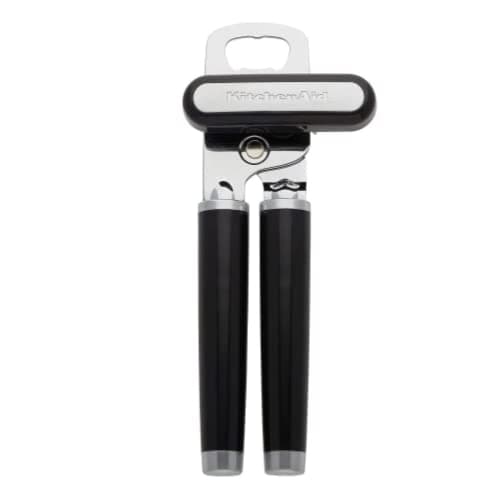 KitchenAid Classic Multifunction Can Opener The one to buy and forget | The one to buy and forget | 9.59.5 out of 10 on our Fits a small kitchen, Value, Durability, Easy to clean scoring | |
| 2 | 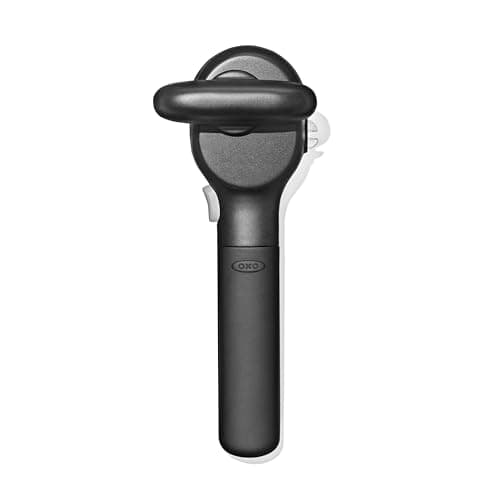 OXO Good Grips Smooth Edge Can Opener No sharp lid, ever | No sharp lid, ever | 9.49.4 out of 10 on our Fits a small kitchen, Value, Durability, Easy to clean scoring | |
| 3 | 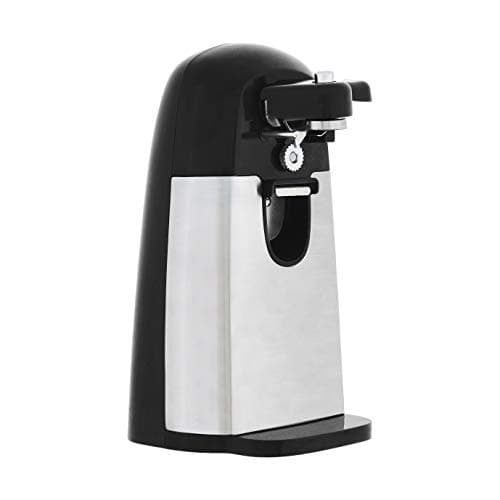 Amazon Basics 3-in-1 Electric Can Opener Hands that cannot turn a knob | Hands that cannot turn a knob | 9.19.1 out of 10 on our Fits a small kitchen, Value, Durability, Easy to clean scoring | $15.29View on Amazon $16.33 · 6% off |
| 4 | 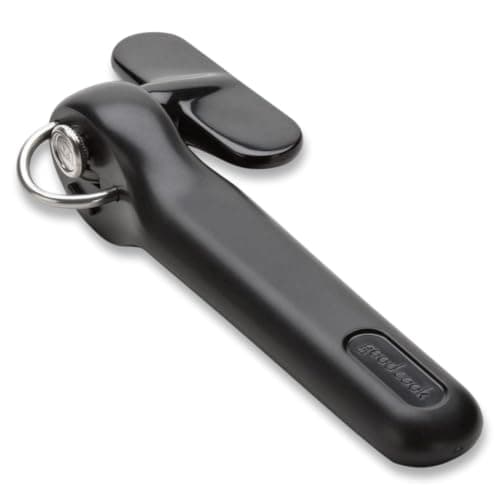 GoodCook Safe-Cut Can Opener The cheapest safe option | The cheapest safe option | 9.39.3 out of 10 on our Fits a small kitchen, Value, Durability, Easy to clean scoring |
#ad — Amazon links on this page are affiliate links. How this site is funded.
Buy the KitchenAid Classic Multifunction Can Opener. It is a manual top-cut opener with a stainless cutting wheel and a knob wide enough to turn with wet hands, it lives flat in a drawer, and it costs less than a takeaway coffee and a pastry. If anyone in the house has arthritis or a weak grip, buy the OXO Good Grips Smooth Edge instead — it cuts round the side, so no part of the can ends up sharp.
This is the single cheapest thing on the first-apartment kitchen list and one of the two most commonly bought twice, because the first one chews the lid, sheds metal flakes into the soup and gets thrown out inside a year. The fix is not spending more. It is understanding that there are two completely different mechanisms sold under the same name, and only one of them is safe to hand to a housemate.
Scores below weigh published specifications, the physical design and consistent owner-reported experience over time. See how we pick.
Top-cut versus side-cut: the only decision that matters
A top-cut opener puts a hardened wheel through the lid just inside the rim and rolls it round. It is fast, it is cheap, and it leaves you holding a disc of metal with a freshly cut edge all the way round it. That disc is the reason can openers send people to urgent care.
A side-cut (often sold as “smooth edge” or “safe-cut”) opener grips the rim and cuts through the side of the can below the seam. The lid comes away whole and flat, neither piece has a cut edge, and the blade never touches the food. It is slower, it needs a firmer squeeze to bite, and it costs more.
| Top-cut | Side-cut (smooth edge) | |
|---|---|---|
| Speed | Faster — a few seconds a can | A few seconds slower per can |
| Sharp edge left behind | Yes, all the way round the lid | None on either piece |
| Blade touches the food | Yes | No — it cuts the outer wall |
| Lid can reseal the can | No, the lid is deformed | Yes — a flat lid sits back on for the fridge |
| Grip strength needed | Moderate, continuous turning | Higher to start, then light |
| Typical price | The cheapest option | Roughly half again as much |
If you cook for yourself and nobody else ever touches the can opener, top-cut is a perfectly rational choice and you should buy the KitchenAid. If a child, a housemate or anyone with reduced hand strength will use it, pay for the side-cut. That is the whole decision.
When an electric opener is the right answer
An electric opener is not a luxury upgrade; it is an accessibility tool that happens to be sold next to the manual ones. If the problem is grip — arthritis, a hand injury, tendonitis, any condition where sustained rotational force is painful — no manual opener solves it, including the comfortable ones. One button does.
The cost is counter space, and in a small kitchen that is a genuine cost. A 50 W one-touch opener occupies about the same footprint as a travel mug, which sounds trivial until you remember what else is competing for that counter: a toaster, a coffee maker, a air fryer and a dish rack. Our starter-kit budget page treats counter inches as a currency, and an electric can opener spends a lot of it for one job.
One detail worth knowing: an electric opener is still a top-cut mechanism. The magnetic lid holder means the lid does not drop into the food, which is the problem it is actually solving — but the edge of that lid is just as sharp as it is on a manual top-cut opener. Electric does not mean smooth-edge.
What to look for
- Knob diameter, not handle length. The thing you turn is the thing that fails you. A knob under about an inch across is hard to use with wet or soapy hands, which is exactly when you use a can opener.
- Stainless cutting wheel, and hand-wash it. Every opener in this category uses a hardened steel wheel on a pivot. The dishwasher is what kills them: it strips the lubricant from the pivot and the wheel starts tearing rather than cutting.
- A lid lifter or magnet. Otherwise you are fishing a sharp disc out of a full can with a fork, which is the actual mechanism of most can-opener injuries.
- Skip the multi-tools. A bottle opener moulded into the handle is free and harmless. A can opener that also claims to be a jar opener, a bag cutter and a bottle opener is usually worse at all four.
What to skip
Butterfly or “church key” openers. The old-fashioned twist-key type with no gearing. They work, they cost almost nothing, and they require more hand strength than any other option on the market. Buy one for a camping box, not a kitchen drawer.
Battery-powered clamp-on openers. The ones that sit on the rim and walk around the can unattended. When they work they are delightful; when the can is slightly out of round they stall halfway and leave you with a half-opened can and a sharp flap. A corded 50 W unit is the more reliable form of the same idea.
Anything with a plastic cutting wheel housing. The wheel needs to be held in rigid alignment under load. Plastic flexes, the wheel skews, and the cut wanders off the seam.
The short version
- Top-cut openers are faster and cheaper; side-cut (smooth edge) openers leave nothing sharp and keep the blade out of the food.
- The KitchenAid Classic is the buy-and-forget pick: stainless wheel, big knob, flat in a drawer.
- Buy the OXO Good Grips Smooth Edge if anyone in the house has arthritis, a weak grip, or shares the kitchen with kids.
- Electric openers solve grip, not sharpness — they are still top-cut, and the lid edge is still sharp.
- Hand-wash any can opener. The dishwasher is what turns a cutting wheel into a tearing wheel.
Every pick in detail
#ad we may earn a commission · price as of November 13, 2026
#1 · The one to buy and forget
KitchenAid Classic Multifunction Can Opener
A top-cut opener with a stainless steel cutting wheel and handles wide enough to turn with wet hands. It is the cheapest thing on this page that still feels like a tool rather than a gadget.
- Fits a small kitchen
- 9.7
- Value
- 9.6
- Durability
- 9.3
- Easy to clean
- 9.1
What we like
- The turning knob is large enough to use with wet or soapy hands
- Cuts the lid cleanly instead of chewing it, so it does not shed metal flakes
- Drawer-flat: no counter space, no cord, nothing to plug in
Good to know
Top-cut, so the removed lid has a sharp edge and goes straight in the bin
Specifications
- Manual top-cut opener; stainless steel cutting wheel
- Built-in bottle opener on the handle
- Soft ergonomic handles; hand-wash
- Sold in black and in Empire Red — the same tool, listed separately
Who it is for
Almost everyone. Buy this unless someone in the house struggles with grip strength.
#ad we may earn a commission · price as of November 13, 2026
#2 · No sharp lid, ever
OXO Good Grips Smooth Edge Can Opener
It cuts around the side of the can rather than through the top, so the lid comes off with no cut edge on either piece and the blade never touches the food. The safest opener here, and the one to buy for a shared kitchen.
- Fits a small kitchen
- 9.6
- Value
- 9.2
- Durability
- 9.4
- Easy to clean
- 9.6
What we like
- The lid comes off whole and flat, so it can sit back on the can in the fridge
- Nothing you handle afterwards is sharp — the biggest kitchen cut hazard, removed
- OXO's handles are the best in the category for weak or wet hands
Good to know
Costs well over half again what a good top-cut opener does
Specifications
- Side-cutting mechanism — leaves no sharp edge on the lid or the can
- The blade does not contact the food
- Built-in lid lifter, so you never touch the cut lid
- Soft non-slip Good Grips handles; listed as arthritis-friendly
Who it is for
A house with kids, anyone with arthritis or a weak grip, and anyone who has ever cut a finger on a lid.
$16.33 · 6% off
#ad we may earn a commission · price as of November 13, 2026
#3 · Hands that cannot turn a knob
Amazon Basics 3-in-1 Electric Can Opener
One button, 50 watts, and a magnetic lid holder that keeps the cut lid out of the can. It also sharpens knives and opens bottles, which is two more jobs than it needs to do but no worse for it.
- Fits a small kitchen
- 8.7
- Value
- 9.4
- Durability
- 9.0
- Easy to clean
- 9.2
What we like
- Needs no grip strength at all, which is the entire reason to buy an electric opener
- The magnet holds the cut lid, which is also the tidiest way to deal with it
- Cheaper than most brand-name electric openers by a clear margin
Good to know
It lives on the counter, which in a small kitchen is a real cost
Specifications
- 50 W electric, one-touch operation
- Stainless steel cutting blade
- Magnetic lid holder, so the lid does not drop into the food
- Integrated bottle opener and knife sharpener
Who it is for
Anyone with arthritis, a hand injury or limited strength. Skip it if your counter is already full.
#ad we may earn a commission · price as of November 13, 2026
#4 · The cheapest safe option
GoodCook Safe-Cut Can Opener
A side-cutting opener for well under half the price of the OXO. The handle is harder and the knob is smaller, but the mechanism that matters — no sharp edge, no blade in the food — is the same idea.
- Fits a small kitchen
- 9.6
- Value
- 9.7
- Durability
- 8.9
- Easy to clean
- 9.5
What we like
- Side-cutting safety at a price that makes the top-cut openers look expensive
- Light enough that an older child can use it under supervision
- No cord, no counter space, nothing to service
Good to know
Harder plastic handle than the OXO, and less comfortable over a long session
Specifications
- Side-cutting: no sharp edges, and no blade contact with the food
- Easy-turn knob with an ergonomic handle
- Manual, drawer-stored
- The least expensive opener on this page
Who it is for
A first apartment on a tight budget that still wants the safe mechanism.
Our recommendation
If you read nothing else on this page, this is the short version.
Buy this one
KitchenAid Classic Multifunction Can Opener
Almost everyone. Buy this unless someone in the house struggles with grip strength.
#ad we may earn a commission · price as of November 13, 2026
Or this one, if KitchenAid Classic is not the fit
OXO Good Grips Smooth Edge Can Opener
A house with kids, anyone with arthritis or a weak grip, and anyone who has ever cut a finger on a lid.
#ad we may earn a commission · price as of November 13, 2026
Common questions
What is the best can opener for arthritic hands?
For a manual opener, the OXO Good Grips Smooth Edge — the side-cutting mechanism needs one firm squeeze rather than sustained force, and the soft handles are the best in the category. If turning a knob at all is painful, buy a one-touch electric opener instead; the Amazon Basics 3-in-1 needs no grip strength whatsoever and holds the cut lid on a magnet so you never handle it.
Are smooth-edge can openers better?
Safer, yes. Faster, no. A smooth-edge opener cuts through the side wall of the can below the seam, so neither the lid nor the can is left with a cut edge and the blade never contacts the food. The trade-offs are a slightly slower cut, a firmer initial squeeze and a higher price. For a shared kitchen the safety is worth it; for one careful cook, a good top-cut opener is fine.
Can you put a can opener in the dishwasher?
Don’t, even when the listing says you can. Dishwasher detergent strips the lubricant out of the cutting-wheel pivot and the hot rinse cycle leaves moisture in it, and a stiff or rusting pivot is how a wheel stops cutting and starts tearing the lid. Rinse it under the tap, scrub the wheel with a brush, dry it, and it will outlive the apartment.
Do you need an electric can opener?
Only if grip strength is the problem. An electric opener is not faster than a manual one in practice and it costs real counter space, which in a small kitchen is the scarcest thing you own. Buy one for arthritis, a hand injury or limited strength — that is a genuinely different product need, not a convenience upgrade.
Why do cheap can openers stop working?
Two reasons, and neither is the blade going blunt. The pivot holding the cutting wheel seizes or develops play, so the wheel no longer sits square to the seam; or the gear teeth that drive the can round are moulded plastic and strip. Both are failures of the mechanism rather than the edge, which is why a slightly better-built opener lasts years longer rather than slightly longer.
Sources
Read next
- First-apartment kitchen checklistEvery line of the room, with a pick and a price on each.
- Apartment kitchen starter kit on a budgetWhat the whole kitchen costs if you buy it all at once.
- Best knife sets for beginnersThe other cutting tool you will use every day.
- How many knives do you need?Three. Here is the case against the fifteen-piece block.