How many food storage containers do you need?
The count is the easy part. The mix of sizes decides whether you use them or restack them, and almost every bargain set is weighted wrong for one person.
Top pick
Rubbermaid Brilliance Tritan Plastic Container Set
Genuinely leak-proof latching lids on a clear plastic body — light enough for a lunch bag, and the one food-storage range we have not seen people quietly replace.
#ad we may earn a commission · price as of November 13, 2026
Scored 9.4 · Leftovers that travel. The full ranking and the runners-up are below.
Quick picks
Our ranking at a glance. Tap any row for the full write-up, or the price to go straight to Amazon. Scores are ours, weighing published specs, the design and what owners report after a year — the method is published in full.
| # | Product | Best for | Score | Price |
|---|---|---|---|---|
| 1 | 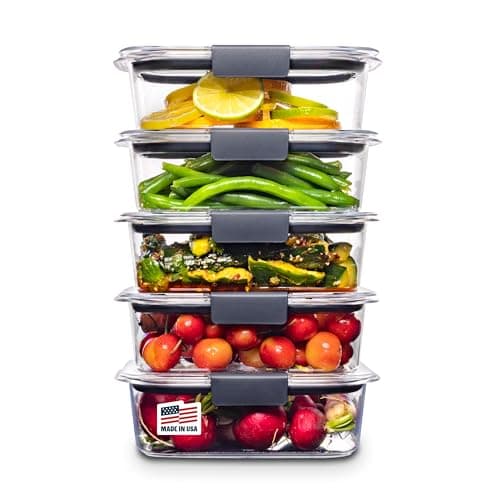 Rubbermaid Brilliance Tritan Plastic Container Set Leftovers that travel | Leftovers that travel | 9.49.4 out of 10 on our Fits a small kitchen, Value, Durability, Easy to clean scoring | |
| 2 | 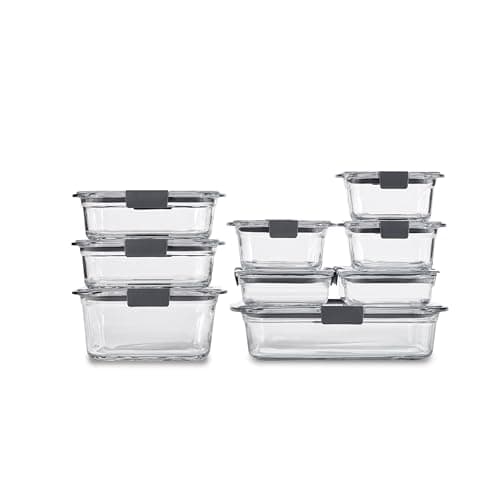 Rubbermaid Brilliance Glass Set of 9 Reheating without the plastic question | Reheating without the plastic question | 9.39.3 out of 10 on our Fits a small kitchen, Value, Durability, Easy to clean scoring | |
| 3 | 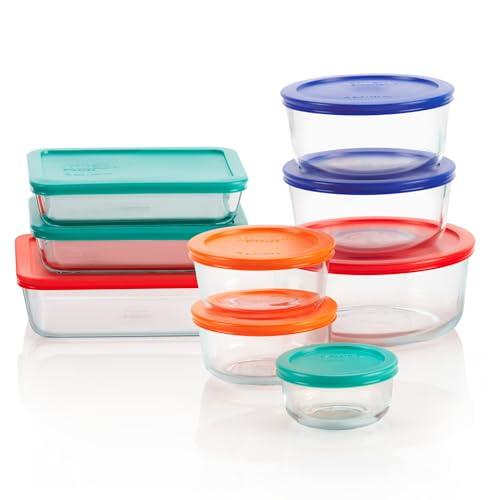 Pyrex Simply Store 18-Piece Glass Set Glass on a budget | Glass on a budget | 9.39.3 out of 10 on our Fits a small kitchen, Value, Durability, Easy to clean scoring | |
| 4 | 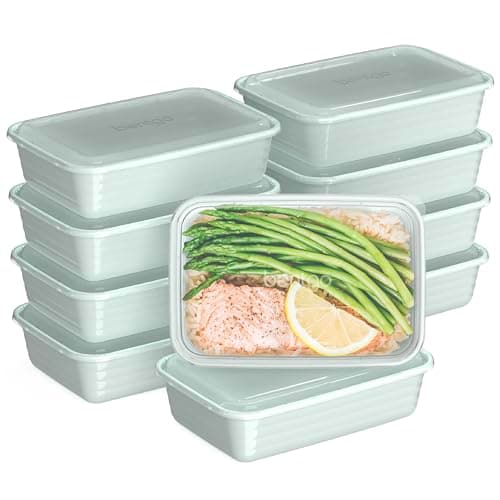 Bentgo Prep 20-Piece Meal Prep Containers Cooking Sunday for the week | Cooking Sunday for the week | 9.39.3 out of 10 on our Fits a small kitchen, Value, Durability, Easy to clean scoring |
#ad — Amazon links on this page are affiliate links. How this site is funded.
One person needs about eight to ten containers. Two people need twelve to fourteen. A meal-prepper cooking Sunday for the week needs twenty, and they should be identical. The mix matters more than the number: roughly half small (1 to 2 cups), a third medium (3 to 4 cups) and two or three large. Buy a leak-proof plastic set first, and add glass only if you reheat at home rather than carrying lunch.
Here is why the number feels slippery. A container is only in the cupboard when it is empty, and a working kitchen always has three or four in use, one in a bag and two in the dishwasher. So “how many do I need” is really “how many can be in circulation at once” — which is set by how often you cook and how often you run the dishwasher, not by the size of the fridge.
The count, by how you actually eat
| How you eat | Containers | The mix |
|---|---|---|
| One person, cooks a few times a week | 8 to 10 | 4 small, 3 medium, 2 large |
| One person, takes lunch every day | 10 to 12 | 6 small, 4 medium, 2 large — and all leak-proof |
| Two people sharing a kitchen | 12 to 14 | 6 small, 5 medium, 3 large |
| Batch cooks on Sunday | 20, matching | Uniform single-compartment containers that stack flat |
| Reheats at home, never carries food | About 9, in glass | Glass bodies, snap or latch lids, no transport duty |
Two things fall out of that table. First, the person taking lunch to work needs more small containers than anything else, and almost every 20-piece bargain set is weighted the other way. Second, the batch cook should not buy a mixed set at all: the whole value of meal prep is that twenty identical boxes stack in the fridge as one block.
The sizes, and what each one is for
- 1 to 2 cups (small). Half an avocado, a portion of rice, cut fruit, last night’s sauce. The most used and most under-bought size.
- 3 to 4 cups (medium). A single meal. This is the lunch size, and the one that has to actually seal if it travels in a bag.
- 6 to 7 cups (large). A batch of chili, a cooked chicken, a salad for four. Two or three is plenty — large containers are what eat shelf space.
- Flat and wide rather than tall. In a small fridge, shelf area is what you run out of first and height what you run out of last. Flat containers stack; tall ones tip.
Where a dozen containers go in a small kitchen
This is the part that makes people under-buy, so it is worth being concrete. A dozen containers do not live as a dozen containers — they nest.
- Bodies nested, lids filed on edge. Nest the bodies inside each other and stand the lids up in a row like books, largest at the back. A dozen containers then occupies about the footprint of a cereal box.
- One shelf, not one drawer. Drawers make you lift lids out of a pile. A shelf lets you file them, which is the difference between a tidy cupboard in week one and a lid avalanche in week three.
- In a studio, the large ones double as pantry storage. Rice, pasta and flour in sealed containers rather than open bags is the only reliable answer to pantry pests in an older building.
If the cupboard is already full, the honest fix is a shelf riser rather than fewer containers — the same trick that works for under-sink storage one room over.
Four days, and the other published rules
Three rules decide how many containers are in circulation, and they are not opinions:
- Leftovers keep three to four days in the fridge. USDA guidance is three to four days at 40°F or below — so containers filled on Sunday have to be emptied or frozen by Wednesday or Thursday. That, not the cupboard, is the real cap on batch cooking.
- Cool it fast, in shallow containers. Dividing a big pot between several shallow containers is the USDA-recommended way to get hot food through the temperature danger zone quickly. It is also the practical argument for owning more medium containers than large ones.
- Lids are the part that fails. Latches, gaskets and snap rims wear out long before the bodies do, which is why a set is worth judging by its lid rather than its piece count.
So what to buy
- Default, one or two people: a leak-proof plastic set in the 10-piece range. Light enough to leave the house, and the lids actually seal.
- You reheat at home: glass. No plastic against hot food, and the bodies double as small bakeware.
- Glass on a budget: snap-lid glass. Airtight rather than leak-proof, which is fine for food that never leaves the fridge.
- You batch cook: twenty identical containers, and nothing else.
The full ranking with every spec is in the best food storage containers, and if you are still deciding between materials, glass versus plastic is the page for that.
The short version
- Eight to ten containers for one person, twelve to fourteen for two, twenty matching ones for a batch cook.
- Buy more small containers than large — most bargain sets are weighted the wrong way.
- Nest the bodies and file the lids on edge; a dozen then takes about a cereal box of space.
- USDA puts leftovers at three to four days in the fridge, which is the real cap on how many you need at once.
- Dividing hot food between shallow containers is the recommended way to cool it quickly.
- Lids fail before bodies, so buy the set with the better lid.
The picks in detail
#ad we may earn a commission · price as of November 13, 2026
#1 · Leftovers that travel
Rubbermaid Brilliance Tritan Plastic Container Set
Genuinely leak-proof latching lids on a clear plastic body — light enough for a lunch bag, and the one food-storage range we have not seen people quietly replace.
- Fits a small kitchen
- 9.5
- Value
- 9.3
- Durability
- 9.3
- Easy to clean
- 9.4
What we like
- Lids actually seal — soup survives a backpack
- Clear body means you can see what you forgot
- Light, so it is the set that leaves the house
Good to know
Latches are the failure point after a few years
Specifications
- Tritan plastic, BPA-free and crystal clear
- Four-latch airtight, leak-proof lids
- Microwave, dishwasher and freezer safe
- Stacks and nests
Who it is for
Anyone taking lunch to work or class. The default pick.
#ad we may earn a commission · price as of November 13, 2026
#2 · Reheating without the plastic question
Rubbermaid Brilliance Glass Set of 9
Glass bodies with the same latching lids, so you can microwave and even oven-reheat in the container rather than decanting onto a plate.
- Fits a small kitchen
- 9.0
- Value
- 9.1
- Durability
- 9.4
- Easy to clean
- 9.6
What we like
- No plastic in contact with hot food
- Does not stain or hold odors
- Oven-safe bodies double as small bakeware
Good to know
Heavy — not the set for a commute
Specifications
- Nine containers in assorted sizes
- Borosilicate-style glass bodies, BPA-free lids
- Leak-proof latching lids
- Oven safe without the lid
Who it is for
Meal-preppers who reheat at home. Pair it with a couple of plastic ones for transport.
#ad we may earn a commission · price as of November 13, 2026
#3 · Glass on a budget
Pyrex Simply Store 18-Piece Glass Set
The same nine glass containers as the latching Rubbermaid set for roughly half the money. The snap-on lids are the compromise, and for food you reheat at home that is a fine trade.
- Fits a small kitchen
- 9.1
- Value
- 9.4
- Durability
- 9.2
- Easy to clean
- 9.5
What we like
- Roughly half the price of the latching glass set, same nine containers
- Tempered glass resists stains and does not absorb odors
- Two-year Pyrex warranty covers the glass and the lids
Good to know
Snap-on lids are airtight, not leak-proof — not the set for soup in a bag
Specifications
- Nine tempered-glass containers, nine lids
- Seven sizes from 1 cup to 7 cups, nesting
- Snap-on BPA-free plastic lids
- Containers dishwasher, microwave and freezer safe
Who it is for
Home reheating and fridge leftovers, where nothing has to survive being carried.
#ad we may earn a commission · price as of November 13, 2026
#4 · Cooking Sunday for the week
Bentgo Prep 20-Piece Meal Prep Containers
Twenty matching single-compartment containers for the price of two Rubbermaid lids — the right tool if you batch-cook and want uniform stacks in the fridge.
- Fits a small kitchen
- 9.6
- Value
- 9.7
- Durability
- 8.8
- Easy to clean
- 9.4
What we like
- Cheap per container
- Uniform stacking saves real fridge space
- Replaceable without matching a set
Good to know
Snap lids are splash-proof, not leak-proof
Specifications
- 20 pieces, uniform size
- PFAS- and BPA-free
- Microwave, freezer and dishwasher safe
- Stacks flat
Who it is for
Batch cooks. Not the set for soup in a bag.
Our recommendation
If you read nothing else on this page, this is the short version.
Buy this one
Rubbermaid Brilliance Tritan Plastic Container Set
Anyone taking lunch to work or class. The default pick.
#ad we may earn a commission · price as of November 13, 2026
Or this one, if Rubbermaid Brilliance Tritan is not the fit
Rubbermaid Brilliance Glass Set of 9
Meal-preppers who reheat at home. Pair it with a couple of plastic ones for transport.
#ad we may earn a commission · price as of November 13, 2026
Common questions
How many food storage containers do I need for one person?
Eight to ten, weighted towards small sizes: about four 1-to-2-cup, three 3-to-4-cup and two large. If you take lunch somewhere every day, make it ten to twelve and insist on leak-proof lids, because three or four are always in circulation — in use, in a bag, or in the dishwasher.
Is a 20-piece container set too many?
For one person who cooks a few times a week, yes — and worse, mixed 20-piece sets are usually weighted towards large sizes you will rarely fill. A 20-piece set makes sense in exactly one case: batch cooking, where you want twenty identical single-portion containers that stack in the fridge as one block.
What sizes of food container are most useful?
The 1-to-2-cup and 3-to-4-cup sizes do most of the work — portions, leftovers and lunches. Keep two or three large containers for a batch of something and no more, because large containers are what consume fridge shelf space. Flat and wide beats tall in a small fridge.
How long can you keep leftovers in a container?
USDA guidance is three to four days in a refrigerator at 40°F or below, or freeze for longer. That is a rule about the food rather than the container, and it is the reason a dozen containers is enough for almost everyone — by day four the early ones are empty again.
Glass or plastic containers for a first apartment?
Both, in that order of priority: plastic for anything that leaves the apartment, because glass in a backpack is heavy and breakable, and a few glass ones for reheating at home. If you are only buying one set, buy the leak-proof plastic — a container that cannot survive a commute is a container you stop using.
Sources
Read next
- Best food storage containersThe full ranking, with the lid detail that decides it.
- Glass vs plastic food storageWhich material for which job.
- The first-apartment kitchen checklistEverything else the room needs.
- The first-apartment grocery listWhat goes in the containers in week one.
- How many pots and pans do you need?The same counting exercise, one cupboard over.