The best nonstick pans for eggs
Eggs are the hardest easy thing to cook, and the pan does most of the work. The right diameter, the right coating and a burner set lower than you think.
Best egg pan
Blue Diamond 8 in Ceramic Nonstick Frying Pan
A PFAS-free diamond-infused ceramic surface that Blue Diamond lists as an egg and omelet pan, and the release on a two-egg fry is the best here. Eight inches is the right diameter for two or three eggs.
#ad we may earn a commission · price as of November 13, 2026
Scored 9.5 · Eggs, specifically. The full ranking and the runners-up are below.
Quick picks
Our ranking at a glance. Tap any row for the full write-up, or the price to go straight to Amazon. Scores are ours, weighing published specs, the design and what owners report after a year — the method is published in full.
| # | Product | Best for | Score | Price |
|---|---|---|---|---|
| 1 | 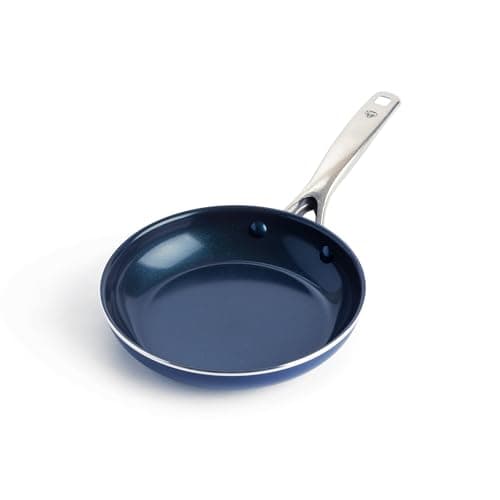 Blue Diamond 8 in Ceramic Nonstick Frying Pan Eggs, specifically | Eggs, specifically | 9.59.5 out of 10 on our Fits a small kitchen, Value, Durability, Easy to clean scoring | |
| 2 | 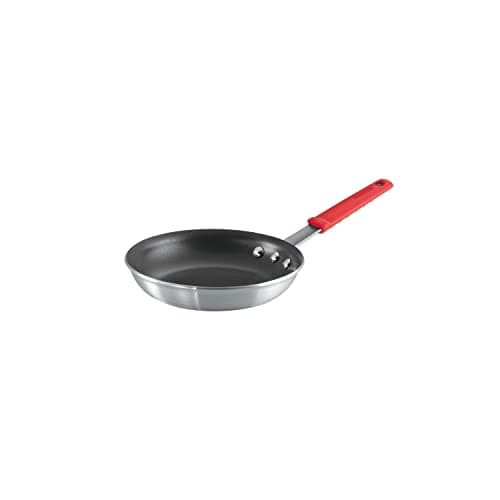 Tramontina Professional 8 in Nonstick Fry Pan The pan you keep | The pan you keep | 9.49.4 out of 10 on our Fits a small kitchen, Value, Durability, Easy to clean scoring | |
| 3 | 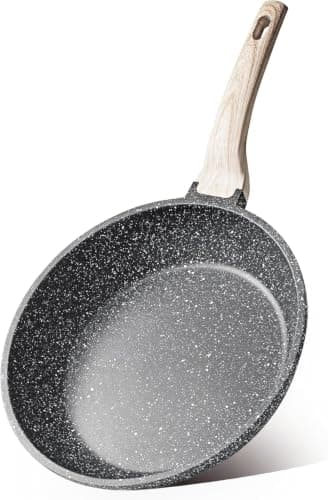 CAROTE 8 in Granite Nonstick Frying Pan A first kitchen on a budget | A first kitchen on a budget | 9.39.3 out of 10 on our Fits a small kitchen, Value, Durability, Easy to clean scoring | $15.99View on Amazon $21.99 · 27% off |
| 4 | 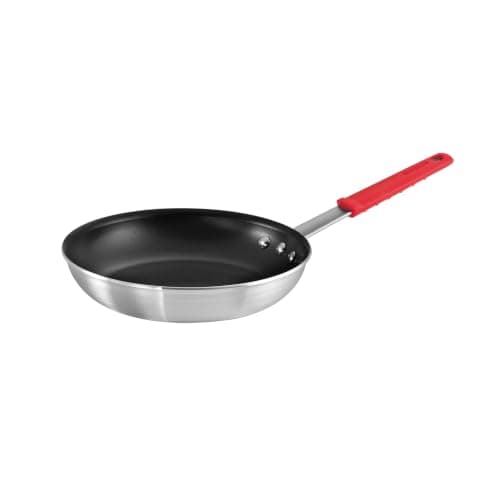 Tramontina Professional 10 in Nonstick Fry Pan Four eggs, or breakfast for two | Four eggs, or breakfast for two | 9.49.4 out of 10 on our Fits a small kitchen, Value, Durability, Easy to clean scoring |
#ad — Amazon links on this page are affiliate links. How this site is funded.
Buy the 8-inch Blue Diamond ceramic nonstick pan. Ceramic releases eggs better than PTFE while it is new, it is PFAS-free, and 8 inches is the correct diameter for two or three eggs — wider and they spread thin and overcook at the edges. If you would rather buy one pan for five years, buy the 8-inch Tramontina Professional instead; it is less slippery on day one and still working long after a ceramic pan is in the bin.
Nearly every pan sold for eggs is sold on its coating, and the coating is only half the story. The other half is the base: eggs scorch where the metal is thin and the heat spikes, which is why a cheap pan can be perfectly nonstick and still give you a brown ring and a raw middle. A pan for eggs needs to be small, flat and thick, in that order.
A single pan is also the cheapest possible upgrade to a kitchen already equipped with a multi-piece set — see our cookware set roundup for the base layer and how many pans you need for the honest count.
Ceramic or PTFE for eggs?
These are the two coatings on the market, and the trade is simple enough to state in one line: ceramic is slicker when new, PTFE stays slick for longer.
| Ceramic (sol-gel) | PTFE (the original nonstick) | |
|---|---|---|
| Release when new | Excellent — the best here | Very good |
| Release after two years | Noticeably reduced; eggs begin to grab | Still good with care |
| Maximum sensible heat | Medium — high heat degrades it fast | Medium; never preheat empty |
| PFAS | PFAS-free formulations widely available | PTFE is a fluoropolymer |
| Metal utensils | Some lines are rated for it | Generally no |
| Price | Lower, for a given size | Similar to slightly higher |
For eggs specifically, ceramic wins, because the thing you want is a pan where a fried egg slides out with no fat at all, and a new ceramic pan does that better than anything. The honest counterpart is that it will not do it forever, and a ceramic egg pan should be thought of as a consumable you replace every couple of years rather than an heirloom.
The broader coating argument — including when to ignore nonstick entirely and buy steel — is in nonstick versus stainless steel.
Why 8 inches, and when to go bigger
An egg wants to be about three-quarters of an inch deep in the pan. Put two eggs in an 8-inch pan and they sit against each other at roughly that depth, cook evenly, and come out as two round eggs. Put the same two eggs in a 12-inch pan and they spread into a thin sheet, the whites set in seconds and the edges go brown and lacy before the yolk has moved.
- 8 in — two or three eggs, a two-egg omelet, one grilled cheese. The right default.
- 10 in — four eggs without them running together, a flat three-egg omelet, and it doubles as the general-purpose pan.
- 12 in and up — not an egg pan. It is a searing pan that will also hold eggs badly.
In a small kitchen there is a second argument for 8 inches: it fits in the sink, it fits in a compact dish rack, and it hangs on a hook. A 12-inch pan does none of those things.
How to not ruin a nonstick pan in the first year
- Never preheat it empty. This is the one that kills pans. An empty nonstick pan on a high burner reaches coating-damage temperature in under two minutes. Butter or oil in first, then the heat.
- Medium is the top of the dial. Eggs cook at well under boiling point. If the pan is hot enough to brown butter instantly, it is too hot for an egg and too hot for the coating.
- Hand-wash, even when the label says dishwasher-safe. Dishwasher detergent is abrasive and alkaline and it dulls both ceramic and PTFE. Hand-washing roughly doubles the useful life of the coating.
- No cooking spray. Aerosol sprays contain lecithin, which polymerizes into a sticky brown film that is almost impossible to remove and that makes a perfectly good pan behave like a ruined one.
- Do not stack it bare. Another pan’s rim grinding on the coating in a cupboard does more damage than a year of spatulas. A paper towel between pans is free.
The method, briefly
Pan on a medium-low burner. A teaspoon of butter in cold, swirled as it melts, and the egg in when the butter stops foaming but before it colours. Lid on for forty seconds if you want the white set over the yolk. Off the heat before it looks done, because the pan keeps cooking.
For an omelet, same pan, slightly more butter, eggs beaten with a fork for ten seconds and no more, and a silicone spatula pulling the set edges to the middle for the first thirty seconds. In an 8-inch pan that is a two-egg omelet; in a 10-inch pan it is three.
The short version
- 8 inches is the right diameter for eggs — a wider pan spreads two eggs too thin and browns the edges.
- Ceramic releases eggs better when new; PTFE holds its release longer. For eggs, ceramic wins and gets replaced.
- A thick base matters as much as the coating. Thin pans scorch the egg where the metal is thinnest.
- Never preheat a nonstick pan empty, never use aerosol cooking spray, and hand-wash it.
- Buy the 10 in instead if it is your only pan rather than your egg pan.
Every pick in detail
#ad we may earn a commission · price as of November 13, 2026
#1 · Eggs, specifically
Blue Diamond 8 in Ceramic Nonstick Frying Pan
A PFAS-free diamond-infused ceramic surface that Blue Diamond lists as an egg and omelet pan, and the release on a two-egg fry is the best here. Eight inches is the right diameter for two or three eggs.
- Fits a small kitchen
- 9.7
- Value
- 9.5
- Durability
- 9.0
- Easy to clean
- 9.7
What we like
- Ceramic release on eggs is genuinely better than PTFE while the pan is new
- PFAS-free, which is why a lot of people are shopping for a new pan at all
- Rated for metal utensils, so a spatula edge will not immediately ruin it
Good to know
Ceramic loses slickness faster than PTFE — plan on a year or two of perfect release
Specifications
- 8 in diameter — the right size for 2-3 eggs
- Diamond-infused ceramic nonstick, PFAS-free
- Metal-utensil safe; oven and dishwasher safe
- Stay-cool handle
Who it is for
Anyone who cooks eggs more than twice a week and wants them to slide out.
#ad we may earn a commission · price as of November 13, 2026
#2 · The pan you keep
Tramontina Professional 8 in Nonstick Fry Pan
The restaurant line: heavy-gauge aluminum, a reinforced nonstick coating and a riveted handle, made in Brazil. It will not out-slide a new ceramic pan on day one, and it will still be working when the ceramic one is in the bin.
- Fits a small kitchen
- 9.5
- Value
- 9.2
- Durability
- 9.6
- Easy to clean
- 9.4
What we like
- A thick base means no hot spot in the middle, which is what scorches eggs
- The commercial-kitchen build is the durability benchmark in this price range
- Flat enough to sit properly on a glass or electric coil top
Good to know
Twice the price of the CAROTE, for a coating that is slick rather than miraculous
Specifications
- 8 in diameter; heavy-gauge aluminum body
- Reinforced nonstick coating from Tramontina's commercial line
- Dishwasher and oven safe
- Silicone-covered riveted handle; made in Brazil
Who it is for
Anyone who would rather buy one pan for five years than three pans for two years each.
$21.99 · 27% off
#ad we may earn a commission · price as of November 13, 2026
#3 · A first kitchen on a budget
CAROTE 8 in Granite Nonstick Frying Pan
The cheapest pan here that does not compromise on the thing that matters: eggs come out of it. Same granite-look coating as the CAROTE set we recommend, which makes it the obvious add-on if you already bought that set.
- Fits a small kitchen
- 9.7
- Value
- 9.7
- Durability
- 8.8
- Easy to clean
- 9.5
What we like
- Under fifteen dollars, which is less than one delivery order
- Matches the CAROTE 20-piece set, so the kitchen looks deliberate
- Induction-capable, which matters if the next apartment has an induction hob
Good to know
A thin base heats fast and unevenly, so it needs a lower flame than you expect
Specifications
- 8 in diameter; granite-style nonstick coating
- PFOA-free
- All-stovetop compatible, including induction
- Cool-touch handle
Who it is for
A first apartment buying everything at once. Replace it in two years and you are still ahead.
#ad we may earn a commission · price as of November 13, 2026
#4 · Four eggs, or breakfast for two
Tramontina Professional 10 in Nonstick Fry Pan
The same commercial-line pan two inches wider, which is the difference between two eggs and four, and between a folded omelet and a flat one. If you are buying one pan rather than one egg pan, buy this size.
- Fits a small kitchen
- 9.3
- Value
- 9.1
- Durability
- 9.6
- Easy to clean
- 9.4
What we like
- Takes four eggs without them running into each other, or a 3-egg omelet flat
- Doubles as the general-purpose pan, so it earns its hook in a small kitchen
- Same durability as the 8 in, which is the best here
Good to know
The most expensive pan on this page
Specifications
- 10 in diameter; heavy-gauge aluminum body
- Reinforced nonstick coating from Tramontina's commercial line
- Dishwasher and oven safe
- Silicone-covered riveted handle; made in Brazil
Who it is for
A two-person household, or anyone who wants one pan to do eggs and everything else.
Our recommendation
If you read nothing else on this page, this is the short version.
Buy this one
Blue Diamond 8 in Ceramic Nonstick Frying Pan
Anyone who cooks eggs more than twice a week and wants them to slide out.
#ad we may earn a commission · price as of November 13, 2026
Or this one, if Blue Diamond Ceramic Nonstick is not the fit
Tramontina Professional 8 in Nonstick Fry Pan
Anyone who would rather buy one pan for five years than three pans for two years each.
#ad we may earn a commission · price as of November 13, 2026
Common questions
What size pan is best for eggs?
Eight inches. Two eggs sit against each other at the right depth in an 8-inch pan and cook evenly; the same two eggs in a 12-inch pan spread into a thin sheet and the edges brown before the yolk sets. Go to 10 inches if you regularly cook four eggs or want one pan that also handles everything else.
Is ceramic or PTFE nonstick better for eggs?
Ceramic, while it is new — a fresh ceramic pan releases a fried egg with no fat at all, which nothing else quite matches. PTFE holds its release for longer. The practical answer is to treat a ceramic egg pan as a two-year consumable, or buy a well-built PTFE pan and accept slightly less drama on day one.
Why do eggs stick to my nonstick pan?
Usually one of three things. The pan is too hot, so the proteins seize and grip before the fat can get between them and the surface. The coating has been degraded by empty preheating, the dishwasher or aerosol spray. Or there is an invisible polymerized film from cooking spray sitting on top of the nonstick. Turn the heat down first — it is the cause more often than the coating.
How long does a nonstick egg pan last?
A ceramic pan used daily for eggs gives one to two years of genuinely perfect release, then gradually needs a little butter. A well-built PTFE pan treated properly — medium heat, hand-washed, no spray, no stacking — will run three to five years. Both numbers roughly halve if the pan goes in the dishwasher.
Can you use metal utensils on a nonstick pan?
On most, no. Some ceramic lines are explicitly rated for metal utensils, including the Blue Diamond pans here, and that rating is real rather than marketing. Even so, a silicone or nylon spatula costs a few dollars and removes the question entirely — and the thing that actually scratches pans is not the spatula but another pan stacked on top in the cupboard.
Sources
Read next
- Cast iron alternatives for a small apartmentThe bigger, hotter pan that sits alongside the egg pan.
- Best cookware sets for a small apartmentThe base layer this pan sits beside.
- Nonstick versus stainless steelWhen to stop buying coatings altogether.
- How many pots and pans do you need?Four. Here is which four.
- Best cookware sets for an electric stoveFlat bases matter more on coil and glass tops.