Cast iron alternatives for a small apartment
A 10-inch cast iron skillet weighs about five and a half pounds, needs drying the second it leaves the sink, and cannot go near tomato sauce. In a rental kitchen with one drawer and a shared sink, there are three materials that do the same job and ask less of you.
Best cast-iron alternative
Tramontina Signature Tri-Ply Clad Stainless 10 in Fry Pan
Tri-ply stainless gets you the brown crust people buy cast iron for, with none of the maintenance — it goes in the dishwasher, it never rusts, and it does not care that you cooked tomatoes in it.
#ad we may earn a commission · price as of November 13, 2026
Scored 9.5 · Searing with no seasoning at all. The full ranking and the runners-up are below.
Quick picks
Our ranking at a glance. Tap any row for the full write-up, or the price to go straight to Amazon. Scores are ours, weighing published specs, the design and what owners report after a year — the method is published in full.
| # | Product | Best for | Score | Price |
|---|---|---|---|---|
| 1 | 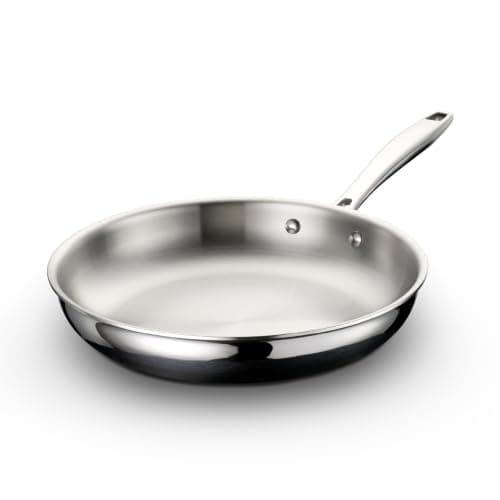 Tramontina Signature Tri-Ply Clad Stainless 10 in Fry Pan Searing with no seasoning at all | Searing with no seasoning at all | 9.59.5 out of 10 on our Fits a small kitchen, Value, Durability, Easy to clean scoring | |
| 2 | 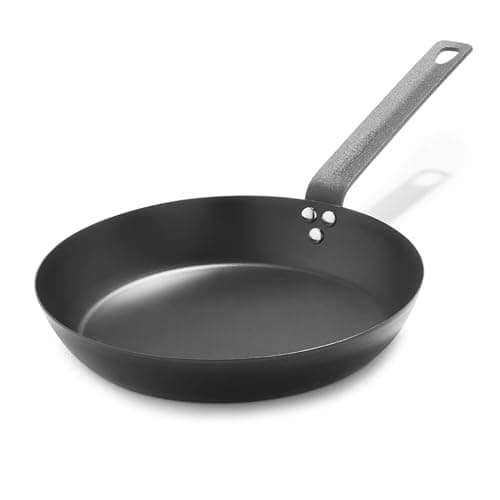 Merten and Storck 10 in Pre-Seasoned Carbon Steel Skillet Cast iron without the weight | Cast iron without the weight | 9.39.3 out of 10 on our Fits a small kitchen, Value, Durability, Easy to clean scoring | |
| 3 | 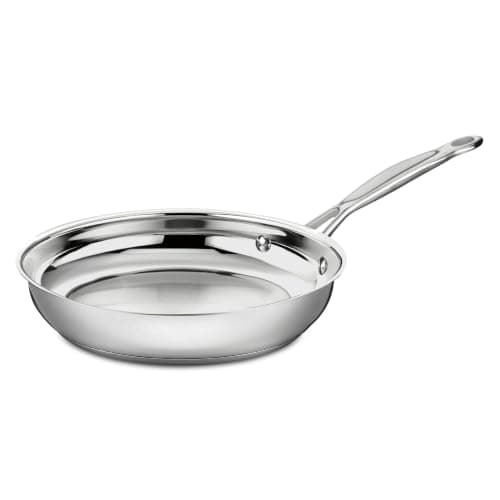 Cuisinart Chef's Classic 10 in Stainless Steel Skillet The cheapest real stainless pan | The cheapest real stainless pan | 9.59.5 out of 10 on our Fits a small kitchen, Value, Durability, Easy to clean scoring | $45.94View on Amazon $49.95 · 8% off |
| 4 | 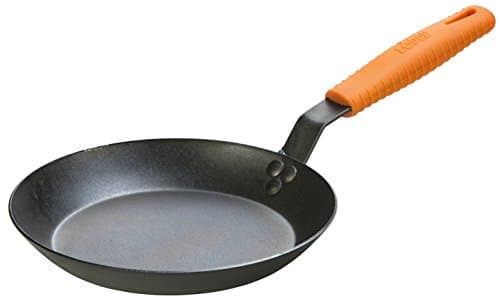 Lodge 10 in Carbon Steel Skillet with Handle Holder The cast-iron brand's light pan | The cast-iron brand's light pan | 9.39.3 out of 10 on our Fits a small kitchen, Value, Durability, Easy to clean scoring | |
| 5 | 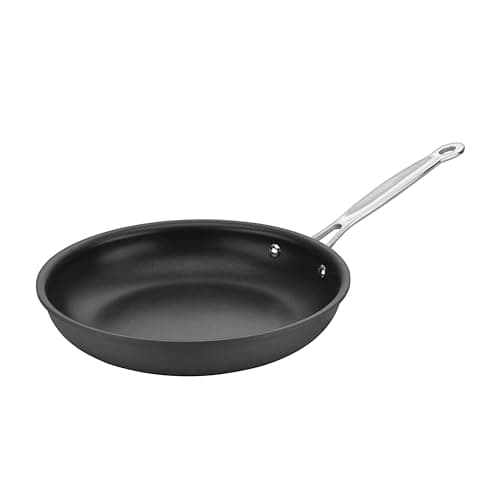 Cuisinart Chef's Classic 10 in Hard-Anodized Nonstick Skillet Admitting you did not want cast iron | Admitting you did not want cast iron | 9.39.3 out of 10 on our Fits a small kitchen, Value, Durability, Easy to clean scoring |
#ad — Amazon links on this page are affiliate links. How this site is funded.
For most small apartments, buy the Tramontina Signature tri-ply stainless 10-inch. It sears the way cast iron does, it is induction-ready, and it needs no seasoning at all — you can wash it, stack it wet and cook tomatoes in it, which is the whole list of things cast iron will not tolerate. If what you actually wanted was iron, the Merten and Storck carbon steel skillet is the same metal at roughly a third less weight. If you are honest that your cooking is eggs and a weeknight chicken breast, buy the Cuisinart hard-anodized nonstick and skip the whole category.
The reason this question gets asked at all is that cast iron is genuinely good at a narrow set of things and genuinely bad at living in a small rental. The pan is heavy enough that lifting it one-handed off a back burner is a real motion, not a casual one. It rusts if it sits in a dish rack overnight. It strips its own seasoning if you simmer anything acidic in it. And it has to be stored somewhere, which in a kitchen with two cabinets means it lives on the stove, permanently, taking up a burner.
None of that makes cast iron bad. It makes it a poor fit for a kitchen you share, do not own, and will pack into a car in eleven months. So the useful question is not “what replaces cast iron” but which specific property of cast iron you were buying it for — because three different materials each replace one of them, and no single pan replaces all three.
Scores below weigh published specifications, the physical design and consistent owner-reported experience over time. See how we pick.
First, work out what you were buying it for
Cast iron does three distinct things, and people conflate them constantly. Separate them and the choice makes itself.
- It holds heat. A thick iron pan carries enough thermal mass that a cold steak dropped into it does not collapse the surface temperature, which is what produces a hard brown crust rather than gray steamed meat. This is the property people mean when they say nothing else sears like cast iron, and they are mostly right.
- It takes any heat you can give it. No coating to destroy, so it goes from a screaming hot burner into a 450°F oven without any thought. Nonstick cannot do this at all, and that is the real dividing line in this category.
- It becomes nonstick for free. Polymerized oil builds into a slick surface that costs nothing and renews itself every time you cook fat in it.
Carbon steel gives you all three, at less weight, with the same seasoning chore. Tri-ply stainless gives you the second — any heat, oven, no coating — and gives up the thermal mass in exchange for needing zero maintenance. Hard-anodized nonstick gives you the third and nothing else, because a nonstick coating cannot be run at searing temperature without degrading.
How we picked: four things, in this order
The criteria come before the winners, because the ranking is nothing but the criteria applied. For a small apartment, ours are:
- Weight you can hold at arm’s length. A 10-inch cast iron skillet is around five and a half pounds empty. Add food and you are tipping a seven-pound object over a sink. Carbon steel at the same size lands closer to three and a half, tri-ply around three, hard-anodized under two and a half. That difference decides whether you cook with the pan or avoid it.
- Whether it survives your actual washing-up habits. Not your intended ones. If the pan will sit in a shared sink until tomorrow, seasoning is not a thing you own — it is a thing you lose. Stainless does not care. Iron does.
- Induction compatibility. New-build rentals increasingly ship induction cooktops, and aluminum pans without a magnetic base simply do not heat on them. Every pan on this page except the hard-anodized Cuisinart is induction-ready; check yours with a fridge magnet before ordering anything.
- Where it lives when it is not cooking. One 10-inch skillet in a kitchen with two cabinets is the realistic number. A pan with a long riveted handle does not nest; a pan with no lid takes less room than one with.
Notice what is absent: brand heritage, pre-seasoning quality and the number of pieces in a set. A pre-seasoned pan still needs seasoning from you within a week. And the cookware set question is a separate one — this page is about the single pan you reach for most.
The three materials, compared honestly
Everything in this category reduces to one of three materials. The table is the whole argument of this page in one place.
| Cast iron | Carbon steel | Tri-ply stainless | Hard-anodized nonstick | |
|---|---|---|---|---|
| Typical 10 in weight | About 5.5 lb | About 3.5 lb | About 3 lb | Under 2.5 lb |
| Hard sear on a steak | Best | Nearly as good | Good | No — damages the coating |
| Oven safe at high heat | Yes | Yes | Yes | Limited |
| Needs seasoning | Yes | Yes | No | No |
| Dishwasher | Never | Never | Yes | Hand wash recommended |
| Acidic food (tomato, wine, lemon) | No | No | Yes | Yes |
| Rusts if left wet | Yes | Yes | No | No |
| Eggs without technique | Once seasoned | Once seasoned | No | Yes |
| Induction | Yes | Yes | Yes | Only if the base is magnetic |
| Lifetime | Decades | Decades | Decades | A few years |
Read down the tri-ply stainless column and you will see why it wins this page for most people: it is the only material with no “never” in it. It is worse than iron at exactly one thing — holding temperature when cold food hits it — and better at everything that has to do with living in a rental.
Carbon steel: the literal answer, if you want iron
If you came to this page because you want cast iron and cannot carry it, stop reading comparisons and buy carbon steel. It is the same element, rolled thinner. Restaurant kitchens have used it for a century precisely because a cook who lifts a pan four hundred times a shift will not lift iron.
What you keep:
- The hard sear, because the metal still takes and holds real heat.
- Oven and broiler safety with no upper limit worth worrying about.
- A seasoning layer that gets better with use and costs nothing.
- A pan that outlives you if you do not abandon it wet.
What you give up:
- Some thermal mass. A thin pan recovers temperature faster but dips further when cold food lands. In practice this matters for one thick steak and almost nothing else.
- Nothing else. The maintenance is identical: dry it immediately, wipe a film of oil in it, do not simmer tomato sauce in it.
The seasoning question, answered plainly. “Pre-seasoned” on a listing means the factory baked one thin layer on so the pan does not arrive rusty. It is a primer, not a finish. Expect to cook three or four fatty things in it — bacon, fried potatoes, anything in oil — before eggs stop sticking. That is a week, not a project, and it is the single most common reason people return a carbon steel pan in the first fortnight.
Tri-ply stainless: what you buy when you will not do upkeep
Tri-ply means three bonded layers: stainless on the cooking surface, an aluminum core for conduction, stainless on the outside so it works on induction. The aluminum runs through the walls as well as the base, which is the difference between tri-ply and the cheaper disc-base construction where a slug of aluminum is welded under the bottom only.
Both are on this page deliberately. The Tramontina Signature is full tri-ply; the Cuisinart Chef’s Classic is disc-base and meaningfully cheaper. The practical difference is that a disc-base pan heats its walls less evenly, so a sauce reducing up the sides behaves slightly differently. For frying, searing and almost all weeknight cooking, you will not notice.
The sticking problem is a technique problem, and it is learnable in one evening. Stainless sticks when the pan is too cold or the food goes in too early. The fix is the same every time: heat the dry pan until a drop of water skitters across it as a bead rather than hissing and evaporating, then add the fat, then add the food. Protein releases on its own when the crust forms; if it is stuck, it is not ready to turn. That one paragraph is the entire difference between people who love stainless and people who put it in a cupboard.
Hard-anodized nonstick: the honest option nobody admits to
A large share of people shopping for cast iron do not want cast iron. They want a pan that food comes off, that is light, and that does not require a relationship. That pan exists and it is hard-anodized nonstick.
Hard-anodizing is an electrochemical treatment that makes aluminum very hard and non-reactive; the nonstick coating sits on top of it. The result is the lightest pan on this page, the easiest to clean and the only one that will cook an egg with no technique on day one.
It is not a cast-iron substitute and we are not going to pretend otherwise. Nonstick coatings degrade above roughly 500°F, which is below the temperature a hard sear wants. Run one hot enough to brown a steak properly and you are shortening its life every time. Buy it for what it is good at — eggs, fish, pancakes, anything delicate — and accept that it is a wear item you will replace, unlike every other pan here.
If eggs are the actual job, our best nonstick pans for eggs page goes deeper on the smaller 8-inch sizes that suit them better.
Buy a 10-inch, and here is why
Skillet size is the other half of this decision and it gets far less thought than it deserves. The autocomplete questions — is a 10-inch skillet big enough, what size skillet should I buy — have a short answer for a small kitchen.
| Size | Cooks | Verdict for a small kitchen |
|---|---|---|
| 8 in | One or two eggs, one fillet | A second pan, never the only one |
| 10 in | Two portions, two chicken breasts, a stir fry for two | The right single pan |
| 12 in | Four portions, a whole chopped onion with room | Too heavy and too wide for most rental burners |
| 12 in + lid | A one-pan dinner | Only if you cook for four and have the storage |
Ten inches is the size that fits a standard rental burner without overhanging into the next one, holds two portions without crowding, and still fits in a dish rack. Twelve inches sounds more capable and is, in a kitchen with the counter and cabinet space to justify it. In a galley kitchen it is a pan you stop taking out.
Check your stovetop before you order anything
This takes ten seconds and saves a return. Put a fridge magnet on the bottom of any pan you already own and on your cooktop surface:
- Flat glass surface, no visible coil, stays cool next to the pan — induction. The pan’s base must be magnetic. Cast iron, carbon steel and every tri-ply pan here qualify; plain aluminum and many hard-anodized pans do not.
- Flat glass surface that glows red and stays hot — radiant electric. Anything works, but a flat, heavy base contacts better and heats more evenly.
- Exposed metal coils — the older rental standard. Anything works; warped thin pans rock on the coil.
- Gas — anything works, and this is where carbon steel is happiest, because flame up the sides is what builds the patina.
Our cookware for an electric stove page covers the glass-top case in more detail, including the dragging and scratching problem heavy iron pans cause on a ceramic surface — which is one more argument against cast iron in a rental you have to hand back.
Keeping any of these alive in a shared kitchen
- Iron and carbon steel: dry it on the burner, not in the rack. Thirty seconds over a low flame drives off the water a towel leaves behind. This single habit is the difference between a pan that develops a patina and one that develops rust.
- Never leave iron or carbon steel soaking. Not overnight, not for an hour. A sink of water is how a seasoned pan becomes a rusty one.
- Stainless: deglaze while it is hot. Water into the hot pan lifts the fond in seconds. The same pan left to cool needs a soak and a scrub.
- Nonstick: no metal, no aerosol spray, no high heat. Aerosol cooking sprays leave a polymer residue that builds up and ruins the surface faster than anything else people do to them. Use oil from a bottle.
- Never stack pans bare. A paper towel or a cheap felt pad between nested pans costs nothing and prevents the scratches that kill a coating and scar a patina.
The short version
- Work out which property of cast iron you wanted: thermal mass, high-heat tolerance, or free nonstick. Different materials replace different ones.
- Carbon steel is cast iron at about a third less weight, with identical upkeep. It is the literal alternative.
- Tri-ply stainless is the right default for a rental: no seasoning, dishwasher safe, acid safe, induction ready.
- Hard-anodized nonstick is light and easy and is not a searing pan. Buy it knowing that, or do not buy it.
- Ten inches is the correct single-pan size for one or two people on a rental burner.
- Test your cooktop with a fridge magnet before ordering — induction rejects non-magnetic bases outright.
Every pick in detail
#ad we may earn a commission · price as of November 13, 2026
#1 · Searing with no seasoning at all
Tramontina Signature Tri-Ply Clad Stainless 10 in Fry Pan
Tri-ply stainless gets you the brown crust people buy cast iron for, with none of the maintenance — it goes in the dishwasher, it never rusts, and it does not care that you cooked tomatoes in it.
- Fits a small kitchen
- 9.5
- Value
- 9.3
- Durability
- 9.6
- Easy to clean
- 9.5
What we like
- Zero maintenance — wash it, put it away wet, nothing happens
- Acidic food is fine, which rules cast iron out of half of what you cook
- The aluminum core runs through the walls, so there are no hot spots
Good to know
Food sticks until you learn to preheat properly and add fat at the right moment
Specifications
- Tri-ply clad: stainless, aluminum core, stainless
- 10 in, induction-ready
- Dishwasher safe
- NSF-certified
Who it is for
Anyone who would realistically never season a pan. This is the one that survives a shared sink and a housemate.
#ad we may earn a commission · price as of November 13, 2026
#2 · Cast iron without the weight
Merten and Storck 10 in Pre-Seasoned Carbon Steel Skillet
Carbon steel is the literal answer to the question: the same iron, the same searing, the same oven safety, in a pan you can lift one-handed off a narrow rental stove.
- Fits a small kitchen
- 9.4
- Value
- 9.4
- Durability
- 9.7
- Easy to clean
- 8.8
What we like
- Sears like cast iron and heats up considerably faster
- Light enough to move with one hand, which is the whole point
- Works on induction, which rules in most new rental cooktops
Good to know
Still needs seasoning and must be dried immediately or it rusts
Specifications
- Carbon steel, pre-seasoned
- 10 in — the one-pan size for a small kitchen
- Induction and all stovetops; grill and campfire safe
- Builds a natural nonstick patina with use
Who it is for
Someone who wanted cast iron for steak and vegetables and then picked one up in a shop. This is that pan, minus the weight.
$49.95 · 8% off
#ad we may earn a commission · price as of November 13, 2026
#3 · The cheapest real stainless pan
Cuisinart Chef's Classic 10 in Stainless Steel Skillet
An uncoated stainless pan with an aluminum-encapsulated base — the disc sits under the bottom rather than running through the walls, which costs a little evenness and saves real money.
- Fits a small kitchen
- 9.5
- Value
- 9.6
- Durability
- 9.5
- Easy to clean
- 9.4
What we like
- Materially cheaper than tri-ply for most of the same ability
- Nothing to wear out — no coating, no seasoning
- A pan you can scrub with steel wool without regret
Good to know
Disc base, not full tri-ply — the walls heat less evenly
Specifications
- Uncoated stainless steel, 10 in
- Aluminum encapsulated base for even heat
- Oven safe
- Dishwasher safe
Who it is for
A first kitchen where the pan budget is real and the cooking is simple.
#ad we may earn a commission · price as of November 13, 2026
#4 · The cast-iron brand's light pan
Lodge 10 in Carbon Steel Skillet with Handle Holder
Lodge is the name most people mean when they say cast iron, and this is their carbon steel line — the same high-heat cooking, with the quick temperature response iron does not give you.
- Fits a small kitchen
- 9.4
- Value
- 9.3
- Durability
- 9.7
- Easy to clean
- 8.8
What we like
- The handle holder solves the one thing everybody gets burned by
- Responds to a heat change far faster than cast iron does
- Lodge keeps the line in production, so it is re-buyable years later
Good to know
Needs the same seasoning upkeep as the Merten and Storck
Specifications
- Carbon steel, 10 in
- Silicone handle holder included
- Quick temperature response
- Stovetop and oven
Who it is for
Someone who trusts the Lodge name and wants the lighter version of it.
#ad we may earn a commission · price as of November 13, 2026
#5 · Admitting you did not want cast iron
Cuisinart Chef's Classic 10 in Hard-Anodized Nonstick Skillet
Hard-anodized aluminum with a nonstick surface is the lightest pan here and the easiest to live with — and it is honestly not a cast-iron substitute, because a nonstick coating should never see the heat a sear needs.
- Fits a small kitchen
- 9.6
- Value
- 9.2
- Durability
- 8.8
- Easy to clean
- 9.7
What we like
- Eggs, fish and pancakes release with no technique at all
- Light enough that wrist strength never enters into it
- Wipes clean, which matters in a kitchen with no dishwasher
Good to know
Cannot be run at searing heat — that is how nonstick coatings die
Specifications
- Hard-anodized aluminum, 10 in
- Nonstick interior
- Open skillet — no lid included
- Lightest pan on this page
Who it is for
Someone whose real cooking is eggs and a weeknight chicken breast, and who was going to buy cast iron for a dish they make twice a year.
Our recommendation
If you read nothing else on this page, this is the short version.
Buy this one
Tramontina Signature Tri-Ply Clad Stainless 10 in Fry Pan
Anyone who would realistically never season a pan. This is the one that survives a shared sink and a housemate.
#ad we may earn a commission · price as of November 13, 2026
Or this one, if Tramontina Signature Tri-Ply is not the fit
Merten and Storck 10 in Pre-Seasoned Carbon Steel Skillet
Someone who wanted cast iron for steak and vegetables and then picked one up in a shop. This is that pan, minus the weight.
#ad we may earn a commission · price as of November 13, 2026
Common questions
What is the best alternative to a cast iron skillet?
Carbon steel, if you want the same cooking. It is the same metal rolled thinner, so it sears and takes oven heat identically, at roughly a third less weight, and it builds the same seasoning. If what you actually want is to stop maintaining a pan, tri-ply stainless is the better answer: it will not rust, it goes in the dishwasher, and acidic food is fine in it.
Is carbon steel really lighter than cast iron?
Yes, and the gap is large enough to change behavior. A 10-inch cast iron skillet is commonly around five and a half pounds; a 10-inch carbon steel pan is commonly around three and a half. Check the listed weight of the specific pan before you buy, because thickness varies by maker, but the direction is consistent.
Can you sear a steak in a stainless steel pan?
Yes, and well. Stainless has less thermal mass than iron, so the trick is to preheat longer than feels necessary and not to crowd the pan. Heat the dry pan until a drop of water skitters as a bead, add the fat, then add dry meat and leave it alone. It releases on its own once the crust forms.
Why does food stick to stainless steel?
Almost always because the pan was not hot enough when the food went in, or the food was wet. Cold metal grips protein; hot metal with fat on it does not. The second cause is turning too early — protein releases when the crust is formed, so if it is stuck, it is not ready. Neither is a defect in the pan.
Do you need to season a carbon steel pan if it says pre-seasoned?
Yes. Factory pre-seasoning is one thin protective layer that stops the pan rusting in the box; it is not a finished cooking surface. Cook three or four fatty things in it first — bacon, potatoes in oil — and wipe a film of oil in after each wash. After about a week it behaves the way the reviews describe.
Is a 10-inch skillet big enough?
For one or two people, yes, and it is the size we would buy if we could only own one. It takes two chicken breasts or two portions of a stir fry without crowding, and it fits a standard rental burner without hanging over into the next one. Step to 12 inches only if you regularly cook for four and have somewhere to store it.
Can you use these pans on an induction cooktop?
Carbon steel, cast iron and every tri-ply stainless pan here work on induction, because their bases are magnetic. Hard-anodized aluminum pans only work if the maker has bonded a magnetic plate to the base, and many have not. Hold a fridge magnet against the bottom of the pan: if it grabs, it will heat.
Sources
Read next
- Best cookware sets for a small apartmentIf you need the saucepan and the stockpot too, not just the skillet.
- Best nonstick pans for eggsThe smaller, lower-heat pan that sits alongside this one.
- Nonstick vs stainless steel cookwareThe same materials argument, applied to a whole set.
- Cookware for an electric or glass-top stoveWhy heavy iron is a poor idea on a ceramic cooktop you have to hand back.
- Best flatware sets for a first apartmentThe other thing you eat off every single day.