Are there drills and drivers professionals trust for regular installation work?
Yes, and it is a short list: four battery platforms, chosen for reasons that have almost nothing to do with the number printed on the box.
Top pick
DEWALT 20V MAX XR Drill Driver (DCD771C2)
Two batteries, a metal chuck and the torque to drive long screws into real lumber. If you are buying a house and intend to work on it, start here instead.
#ad we may earn a commission · price as of November 13, 2026
Scored 9.4 · A drill you keep for twenty years. The full ranking and the runners-up are below.
Quick picks
Our ranking at a glance. Tap any row for the full write-up, or the price to go straight to Amazon. Scores are ours, weighing published specs, the design and what owners report after a year — the method is published in full.
| # | Product | Best for | Score | Price |
|---|---|---|---|---|
| 1 | 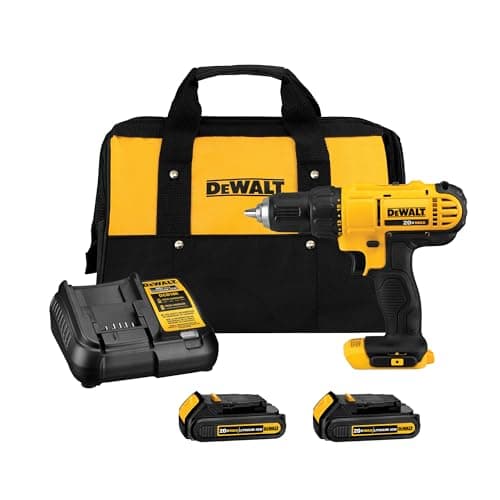 DEWALT 20V MAX XR Drill Driver (DCD771C2) A drill you keep for twenty years | A drill you keep for twenty years | 9.49.4 out of 10 on our Beginner-friendly, Value, Durability, Stores small scoring | |
| 2 | 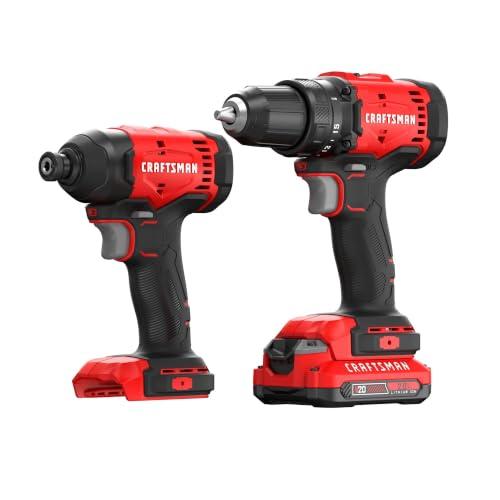 CRAFTSMAN V20 Drill and Impact Driver Combo (CMCK201D1) Two tools, one battery platform | Two tools, one battery platform | 9.39.3 out of 10 on our Beginner-friendly, Value, Durability, Stores small scoring | |
| 3 | 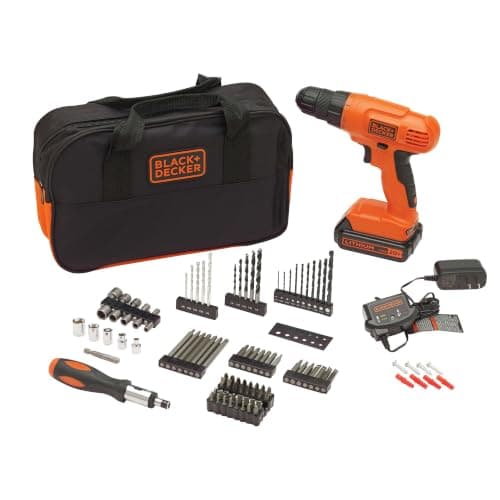 BLACK+DECKER 20V MAX Drill Driver Kit with 100 Accessories A first drill, with bits included | A first drill, with bits included | 9.59.5 out of 10 on our Beginner-friendly, Value, Durability, Stores small scoring |
#ad — Amazon links on this page are affiliate links. How this site is funded.
Yes: DEWALT, Milwaukee, Makita and Bosch are the four platforms professional installers overwhelmingly buy. What they are buying is not peak torque — it is battery availability on every site and in every store, a service network that repairs rather than replaces, and torque that stays consistent as the pack drains. For a homeowner, the entry drill from any of those four is the sensible lifetime buy, and the DEWALT DCD771C2 is the one we recommend.
This question gets asked in a specific way — “for regular installation work” — and that phrase is doing real work. Installation is not demolition. It is cabinets, brackets, blinds, door hardware, TV mounts, shelving: hundreds of repeated fixings a week, into timber and drywall, where the tool has to be predictable rather than brutal. The requirements that follow from that are different from the ones a review round-up optimizes for.
What professionals are actually buying
- Battery availability, first and by a distance. A tradesperson with eight tools on one platform cannot switch brands, and a dead battery on a Tuesday morning has to be replaceable from a store that afternoon. This is why the big four win and why no newcomer displaces them: the tools are good, but the supply chain is the product.
- Service rather than replacement. These brands sell chucks, switches, brushes and gearboxes as parts, and have repair agents. A tool that can be fixed for forty dollars in its fourth year is a different proposition from one that is landfill when the chuck wears.
- Consistent torque across the discharge curve. A brushless motor with good electronics delivers nearly the same torque at 20 percent charge as at 100 percent. On a bench test that is a footnote. On the hundredth cabinet screw of the day it is the difference between every screw seating the same and the last twenty stripping.
- A clutch you can trust. Repeatable clutch settings are what stop a driver sinking a screw head through a cabinet face. Installers care about this far more than about maximum torque figures.
- Ergonomics over hours, not minutes. Grip circumference, balance and trigger feel decide whether your hand still works at 4pm. Weight matters, but balance matters more.
Why it is two tools, not one
Professional installers carry a drill and an impact driver, and this is the single most useful thing a homeowner can learn from them. They are not redundant.
| Drill-driver | Impact driver | |
|---|---|---|
| How it works | Steady rotation with an adjustable clutch | Rotation plus rapid rotational hammer blows |
| Chuck | Keyed or keyless, takes round and hex bits | 1/4 in hex only |
| Best at | Drilling holes, precise driving, anything needing a clutch | Long screws, lag bolts, repeated driving, anything that would stall a drill |
| Why installers carry both | Pilot holes and delicate fixings | Speed and no wrist torque on long fixings |
| If you buy one | The drill. It does both jobs adequately | The driver does not drill holes well |
The full version of this comparison for a first home is in drill versus impact driver. The short answer for a homeowner is: buy the drill first, and add the impact driver as a combo kit when you find yourself driving anything longer than about two inches.
What a homeowner should take from this
Buy into one of the four platforms, at the entry level. The DEWALT DCD771C2 is the canonical example: it is the consumer-tier drill in a professional platform, so it takes the same 20V MAX batteries as the contractor tools, it is repairable, and the batteries will still be on shelves in a decade. That is worth more to a household than a slightly more powerful drill on a platform that may not exist in 2036.
Do not buy the professional-tier tool. A $250 brushless hammer drill is specified for people who use it forty hours a week. For twenty jobs a year it is heavier than you want, and the extra capability sits unused. The money is better spent on a decent stud finder and a bit set, which is where most household jobs actually go wrong.
Buy the combo kit if it exists at your price. A drill and impact driver sharing one battery is the configuration professionals use, and at the consumer tier it often costs about what a mid-range drill alone does. Our budget comparison is best cordless drills under $100, and the no-ceiling ranking is best drills for new homeowners.
Three specifications that mislead
Peak torque in inch-pounds. Measured at stall, which is a condition you should never reach in installation work. Two drills with the same figure can feel completely different because of how the electronics manage the approach to stall.
Maximum RPM. Installation happens in low gear at a few hundred RPM. A high top speed matters for drilling small holes in thin material and almost nowhere else.
Amp-hours as a quality signal. A bigger pack runs longer and weighs more. A 5.0 Ah battery on a household drill is a weight penalty you carry for runtime you never use; 1.5 to 2.0 Ah is the right size for a home.
The short version
- The four platforms professional installers buy are DEWALT, Milwaukee, Makita and Bosch.
- They choose on battery availability, repairability and torque consistency — not on peak torque figures.
- Installers carry a drill and an impact driver because the two do different jobs. Buy the drill first.
- For a household, the entry drill inside a professional platform is the right lifetime buy.
- Peak torque, maximum RPM and amp-hours all mislead. Clutch quality and balance matter more.
The picks in detail
#ad we may earn a commission · price as of November 13, 2026
#1 · A drill you keep for twenty years
DEWALT 20V MAX XR Drill Driver (DCD771C2)
Two batteries, a metal chuck and the torque to drive long screws into real lumber. If you are buying a house and intend to work on it, start here instead.
- Beginner-friendly
- 9.3
- Value
- 9.1
- Durability
- 9.7
- Stores small
- 9.1
What we like
- Two batteries means you never stop mid-job
- Metal chuck holds bits straight for years
- Genuinely enough power for deck screws and joists
Good to know
No bits included — budget $25 more
Specifications
- 20V MAX with two batteries and a charger
- Two-speed transmission, 300 unit watts out
- Metal 1/2 in ratcheting chuck
- LED work light
Who it is for
A first house with projects queued. Overkill for picture hooks.
#ad we may earn a commission · price as of November 13, 2026
#2 · Two tools, one battery platform
CRAFTSMAN V20 Drill and Impact Driver Combo (CMCK201D1)
A drill and an impact driver sharing one battery and charger. The impact driver is what makes long screws and deck boards easy, and having both means never swapping bits mid-job.
- Beginner-friendly
- 9.2
- Value
- 9.4
- Durability
- 9.5
- Stores small
- 8.9
What we like
- The impact driver transforms furniture assembly and decking
- Two tools means one holds a drill bit, the other a driver bit
- A double-sided bit tip and a PH2 screwdriver bit are in the bag
Good to know
Two tools to store
Specifications
- 1/2 in drill/driver rated to 300 UWO plus a 1/4 in impact driver
- One 2.0 Ah V20 battery and a charger
- Impact driver rated to 1,800 in-lbs max torque
- Shared V20 platform, LED on both tools, storage bag
Who it is for
A first house with a deck, a fence or flat-pack furniture in volume.
#ad we may earn a commission · price as of November 13, 2026
#3 · A first drill, with bits included
BLACK+DECKER 20V MAX Drill Driver Kit with 100 Accessories
The drill and the hundred bits and sockets you would otherwise buy separately, at a price that makes the decision easy. For hanging shelves and building furniture it is all the drill you need.
- Beginner-friendly
- 9.7
- Value
- 9.6
- Durability
- 9.1
- Stores small
- 9.3
What we like
- Bits included means you can use it the day it arrives
- The clutch is the beginner-saving feature — it stops you stripping screws
- The battery platform extends to B+D's other 20V tools later
Good to know
Not enough torque for repeated masonry work
Specifications
- 20V MAX lithium battery with charger
- 100-piece accessory set: drill bits, driver bits, sockets
- 11-position clutch so you cannot over-drive a screw
- POWERCONNECT battery fits other B+D 20V tools
Who it is for
Nearly every first home. Step up to the DEWALT only if you are doing real renovation work.
Our recommendation
If you read nothing else on this page, this is the short version.
Buy this one
DEWALT 20V MAX XR Drill Driver (DCD771C2)
A first house with projects queued. Overkill for picture hooks.
#ad we may earn a commission · price as of November 13, 2026
Or this one, if DEWALT 20V MAX is not the fit
CRAFTSMAN V20 Drill and Impact Driver Combo (CMCK201D1)
A first house with a deck, a fence or flat-pack furniture in volume.
#ad we may earn a commission · price as of November 13, 2026
Common questions
What drill brands do professionals use?
Predominantly DEWALT, Milwaukee, Makita and Bosch. The deciding factor is rarely the tool itself: it is that batteries for those four platforms are available in every builders’ merchant and big-box store, the tools are repairable with stocked parts, and a trade already owning six tools on one platform cannot afford to switch.
Are professional drills worth it for home use?
The platform is; the professional-tier tool usually is not. Buy the entry-level drill inside a professional battery system — it shares batteries with everything above it and those batteries will still be sold in ten years. A $250 brushless hammer drill is specified for forty hours a week, and for twenty jobs a year it is mostly extra weight.
Do you need both a drill and an impact driver?
Professionals carry both because they do different things: the drill makes holes and drives precisely with a clutch, the impact driver sinks long screws fast without twisting your wrist. For a home, buy the drill first — it does both jobs adequately — and add an impact driver as a combo kit once you are regularly driving screws longer than about two inches.
What torque do you need for installation work?
Far less than the headline figures suggest. Cabinet and bracket work happens in low gear at a few hundred RPM, with the clutch set low enough not to sink the screw head. A repeatable clutch and steady torque as the battery drains matter much more than a peak torque number, which is measured at stall — a condition you should never reach when installing.
Is a brushless drill necessary?
For professional use, effectively yes — more torque per charge, longer runtime and a motor that survives daily duty. For household use it is a nice-to-have. A brushed 20V drill will hang every shelf, mount every television and assemble every flat pack a first home produces.
Sources
Read next
- Best drills for new homeownersOur ranked picks across the whole price range.
- Best cordless drills under $100What the budget ceiling costs you.
- Drill versus impact driverThe two-tool question, in full.
- Corded versus cordlessThe case the cord still wins.
- Best tool kits for new homeownersWhat to buy around the drill.